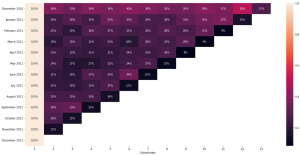
Big Data Analytics refers to the process of examining massive, complex datasets to uncover patterns, trends, correlations, and insights that drive better decision-making. With the exponential growth of digital platforms, IoT devices, social media, and enterprise systems, organizations now generate data at unprecedented scale, speed, and variety.
Traditional data processing tools struggle to handle this volume and complexity. Big Data Analytics bridges that gap by combining distributed computing, advanced analytics techniques, and scalable architectures. For engineers and data professionals, it enables real-time intelligence, predictive modeling, and automation across industries such as finance, healthcare, retail, and manufacturing.
This blog explores what big data analytics is, how it works, its key components, benefits, challenges, and emerging trends supported by practical coding examples where relevant.
What Is Big Data Analytics?
Big Data Analytics is the practice of analyzing large and diverse datasets that cannot be processed efficiently using traditional databases or analytics tools. These datasets are commonly defined by the three V’s – volume, velocity, and variety along with veracity and value.
From a technical standpoint, big data analytics involves:
- Distributed storage systems (like HDFS or cloud object storage)
- Parallel processing frameworks (such as Spark or Flink)
- Advanced analytics including machine learning and statistical modeling
Types of Big Data Analytics
There are four commonly recognized types of big data analytics:
- Descriptive analytics explains what has already happened
- Diagnostic analytics identifies why it happened
- Predictive analytics forecasts future outcomes
- Prescriptive analytics recommends actions based on predictions
Each type builds upon the previous one, increasing both complexity and business value.
How Big Data Analytics Works
Big data analytics follows a structured pipeline that transforms raw data into actionable insights.
Data Collection
Data collection is the first step, where information is gathered from multiple sources such as applications, sensors, logs, transactions, and third-party APIs. Data may arrive in real time or batches.
Example: Collecting streaming data using Kafka (Python)
from kafka import KafkaConsumer
import json
consumer = KafkaConsumer(
‘events’,
bootstrap_servers=’localhost:9092′,
value_deserializer=lambda x: json.loads(x.decode(‘utf-8’))
)
for message in consumer:
print(“Received event:”, message.value)
This approach is common in event-driven architectures and real-time analytics systems.
Data Processing and Cleaning
Raw data is often noisy, incomplete, or inconsistent. Data processing includes filtering, normalization, deduplication, and transformation before analysis.
Example: Cleaning data using PySpark
from pyspark.sql import SparkSession
spark = SparkSession.builder.appName(“BigDataCleaning”).getOrCreate()
df = spark.read.csv(“data.csv”, header=True)
cleaned_df = df.dropna().dropDuplicates()
cleaned_df.show()
Processing at scale is essential to maintain performance and reliability.
Data Analysis
Once cleaned, data is analyzed using statistical techniques, aggregation, and machine learning models. Distributed frameworks allow parallel execution of complex computations.
Example: Aggregation using Spark
df.groupBy(“category”).count().show()
This stage transforms raw data into structured insights.
Insight Generation and Visualization
The final step involves interpreting results and presenting them in a consumable format. Dashboards, reports, and visualizations enable stakeholders to make informed decisions.
Example: Simple visualization with Python
import matplotlib.pyplot as plt
plt.plot([1, 2, 3], [100, 300, 250])
plt.title(“Sales Trend”)
plt.show()
Visualization bridges the gap between technical analysis and business understanding.
Key Components of Big Data Analytics
Big data analytics relies on several core components working together. Distributed storage systems manage massive datasets reliably. Processing engines execute large-scale computations efficiently. Analytics layers apply statistical and machine learning techniques. Visualization and reporting tools communicate insights to users.
Additionally, orchestration tools, metadata management, and monitoring systems ensure data pipelines remain scalable and fault-tolerant.
Benefits of Big Data Analytics
Big data analytics delivers measurable value across organizations. It enables data-driven decision-making by uncovering patterns that would otherwise remain hidden. Businesses can personalize customer experiences, detect fraud in real time, optimize operations, and predict future outcomes more accurately.
From an engineering perspective, big data analytics improves automation, reduces manual intervention, and supports intelligent systems that adapt over time. Organizations leveraging analytics effectively gain a competitive advantage through faster insights and better resource utilization.
Challenges in Implementing Big Data Analytics
Despite its benefits, implementing big data analytics comes with significant challenges. Data quality issues such as missing values or inconsistent formats can undermine results. Managing large-scale infrastructure requires specialized skills and increases operational complexity.
Privacy and security are major concerns, especially when handling sensitive user data. Compliance with regulations like GDPR requires careful governance and access control. Additionally, the cost of infrastructure, storage, and skilled personnel can be a barrier for smaller organizations.
Addressing these challenges requires strong data governance, scalable architecture design, and continuous monitoring.
Future Trends in Big Data Analytics
Edge Computing and IoT Integration
As IoT devices proliferate, data is increasingly processed closer to the source. Edge computing reduces latency and bandwidth usage by performing analytics on devices or local nodes before sending aggregated data to central systems.
This trend enables real-time decision-making in scenarios like smart factories, autonomous vehicles, and healthcare monitoring.
Augmented Analytics
Augmented analytics uses AI and machine learning to automate data preparation, insight discovery, and explanation. Instead of manually querying data, users can rely on intelligent systems to surface insights proactively.
This reduces the dependency on technical expertise and accelerates insight generation across organizations.
Ethical AI and Responsible Data Use
With increased reliance on data-driven systems, ethical considerations are becoming central to big data analytics. Responsible data use includes fairness, transparency, explainability, and privacy protection.
Future analytics systems will increasingly incorporate explainable AI (XAI), bias detection, and compliance-by-design principles to ensure trust and accountability.
Conclusion
Big Data Analytics has become a cornerstone of modern digital systems, enabling organizations to extract meaningful insights from vast and complex datasets. By combining distributed computing, advanced analytics, and scalable architectures, it transforms raw data into actionable intelligence.
For developers and data professionals, understanding how big data analytics works – from data collection and processing to analysis and visualization – is essential for building intelligent, data-driven applications. As technologies evolve, trends like edge computing, augmented analytics, and ethical AI will further shape the future of analytics.
Ultimately, organizations that invest in robust big data analytics capabilities position themselves to make informed decisions, innovate faster, and compete effectively in a data-driven world.