Key Summary
DevOps projects are hands-on builds that run an app through real delivery tooling. They cover containers, CI/CD, infrastructure as code, monitoring, and security. A strong project behaves like a small production system. A push to main triggers tests. The pipeline builds and scans a container image. Terraform or Helm deploys it. Prometheus fires an alert when error rates climb.
Pipelines are now easy to generate. GitHub’s October 2026 Octoverse report tracks this shift. Agents start over 40% of pull requests. Reviewers look for the reasoning behind each build. Projects land best when they show trade-offs, failures, and measured results. Three finished systems carry more weight than twenty starter repos.
Why DevOps Projects Matter for Your Portfolio?
Projects are the proof behind every DevOps claim on a resume. Employers now hire on demonstrated skill. NACE’s Job Outlook 2026 survey found 70% of employers use skills-based hiring. Most of them apply it during interviews, at 87%.
A repository answers interview questions before anyone asks them. It shows how Terraform modules are structured. It shows whether tests gate the deploy. It shows how secrets reach the pipeline. Commit history also shows how a candidate works over weeks.
Projects also build tool fluency. Kubernetes now runs in production for 82% of container users. That figure comes from the CNCF’s January 2026 survey release. Hands-on cluster time is now a baseline expectation.
Why Most DevOps Portfolios Fail to Impress Recruiters?
Most portfolios fall flat because they repeat a tutorial unchanged. Reviewers recognize the same repo names, folder layouts, and default READMEs. Missing pipelines are the next gap. A Dockerfile with no CI shows packaging, not delivery. A cluster with no monitoring shows setup, not operations.
Stale tooling also stands out. Ingress NGINX stopped receiving fixes in March 2026, per the Kubernetes project. Gateway API is the recommended replacement. A project built on retired parts signals an old tutorial. The last gap is silence on outcomes. Some repos carry no numbers, decisions, or failure notes. They give an interviewer nothing to discuss.
What Are Good DevOps Project Ideas for a Beginner’s Portfolio?
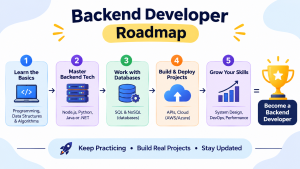
Good beginner projects teach one core skill each. Most finish in a weekend. The seven below cover containers, servers, automation, pipelines, and IaC.

Containerize a Python Application with Docker
Package a small Flask or FastAPI service into an image. Python 3.15 shipped on October 9, 2026, so use the python:3.15-slim base. Run the app as a non-root user and add a health check. Talent500’s Docker guide for beginners covers the core commands.

Check the final image size with docker images after each change.
Launch and Secure an AWS EC2 Instance
Launch an Ubuntu instance and lock it down before installing anything. Allow SSH only from your own IP in the security group. Better still, close port 22 and connect through Session Manager. Require IMDSv2 and turn on automatic security updates.
Automate Linux Configuration with Ansible
Write a playbook that creates users, installs Nginx, and hardens SSH. Group the tasks into roles. Run the playbook twice. The second run should report zero changes. That result proves the playbook is idempotent.
Build a CI/CD Pipeline with GitHub Actions
Create a workflow that lints, tests, and builds the image. Run it on every pull request. Pin each third-party action to a full commit SHA. Add branch protection so main accepts only green builds.

Replace the Python version, test command, and image name with your own.
Run Multi-Container Applications with Docker Compose
Run a web app, PostgreSQL, and Redis from one compose.yaml file. Add a health check to each service. Set depends_on with a healthy condition so the app waits for the database. Named volumes keep data safe across restarts.
Automate Database Backups with Cron Jobs
Schedule a nightly pg_dump through cron. Compress the dump and upload it to object storage. Delete copies older than seven days and log each run. Restore one backup into a fresh database every month. An untested backup proves nothing.
Provision Cloud Infrastructure with Terraform
Define a VPC, a server, and a storage bucket in Terraform. Keep state in a remote S3 backend with locking on. Split the code into modules with input variables. Run terraform plan on every pull request so reviewers see changes first.
What Are the 7 Intermediate DevOps Projects for Real-World Experience?
Intermediate projects connect several tools into one working system. Each one below mirrors a task DevOps teams run every week.
Build an End-to-End CI/CD Pipeline with Jenkins
Write a declarative Jenkinsfile with build, test, scan, and deploy stages. Run each stage inside a Docker agent. Add a manual approval before production. Keep credentials in the Jenkins credentials store and out of the Jenkinsfile.
Set Up a Kubernetes Cluster with kubeadm
Build one control plane node and two workers with kubeadm. Install a CNI plugin such as Calico or Cilium. Kubernetes 1.37 arrived on August 26, 2026. Start on 1.36 and upgrade to 1.37. The upgrade teaches cordon, drain, and version skew rules.
Deploy Prometheus and Grafana for Monitoring
Install the kube-prometheus-stack chart on the cluster. Expose latency, traffic, errors, and saturation from the app. Write alert rules and route them through Alertmanager to Slack. Grafana Labs’ March 2026 survey found 77% of teams investing in Prometheus.
Build Secure AWS Networking with VPCs and Security Groups
Design a VPC with public and private subnets across two Availability Zones. Keep databases in private subnets with no internet route. Let security groups reference each other in place of IP ranges. Turn on VPC Flow Logs to audit traffic.
Implement Blue-Green Deployments
Run two identical environments behind one load balancer or Kubernetes Service. Deploy the new version to the idle side and run smoke tests. Switch traffic in one step. Rollback is the same switch in reverse.
Deploy Applications with Helm Charts
Package the app as a Helm chart with one values file per environment. Run helm lint and helm template in CI. Build on Helm 4, released in November 2025. Helm 3 receives security fixes only until February 10, 2027.
Build a Centralized Logging Stack with ELK
Ship container logs through Filebeat and Logstash into Elasticsearch. Emit logs as JSON so fields parse cleanly. Add a request ID to every line. Set an index lifecycle policy that deletes logs after 14 days. Build Kibana dashboards for error spikes.
What Are the Advanced DevOps Projects for Production-Scale Workflows?
Advanced projects add governance, security, and scale. Each one solves a problem that appears once a platform serves many teams.
Build a GitOps Pipeline with ArgoCD
Store Kubernetes manifests in Git and let Argo CD sync them. Argo CD 3.6 is the current release line. Turn on automated sync with self-heal. Then edit a resource with kubectl and watch Argo CD revert the drift. The CNCF survey found 58% of cloud native innovators use GitOps extensively.
Manage Multi-Cloud Infrastructure with Terraform and Ansible
Deploy the same app to AWS and Google Cloud from one repository. Write one Terraform module per provider behind a shared variable interface. Hand configuration to Ansible once servers exist. Tag every resource with an owner and a cost center.
Create a DevSecOps Pipeline with Automated Security Scanning
Add secret scanning, SAST, dependency checks, and image scanning to every build. Generate an SBOM with Syft and sign images with cosign. Fail the build on critical CVEs.
The pipeline needs protection too. In March 2026, attackers repointed version tags on the trivy-action GitHub Action. The poisoned scanner exposed LiteLLM’s PyPI token, The Register reported. Pin actions to commit SHAs and use trusted publishing for packages.
Harden Kubernetes Security with RBAC and Falco
Give each workload its own ServiceAccount with least-privilege Roles. Enforce the restricted Pod Security Standard on app namespaces. Deploy Falco to watch runtime behavior. Trigger a test alert by opening a shell inside a running container.
Build an AI-Assisted DevOps Workflow with LLMs
Build a bot that reads failed CI logs. It posts a probable cause on the pull request. Give it read-only access. A human approves every change it suggests. Track its accuracy across 50 real failures. Talent500’s piece on AI-written pipelines lists the risks to guard against.
Create an Enterprise DevOps Pipeline for SAFe PI Planning
Model a release train with three teams sharing one pipeline template. Link each commit to a feature in Jira. Use feature flags so code deploys anytime but releases on the PI schedule. Report DORA metrics per team at each PI boundary.
Where to Find DevOps Projects with Source Code?
Reference applications on GitHub are the best starting point. Google’s microservices-demo, called Online Boutique, runs an online store as many small services. The OpenTelemetry Demo ships a shop written in 12 languages. Tracing comes built in. The aws-samples and Azure-Samples organizations publish infrastructure examples for their clouds.
Project repos are another source. Argo CD keeps an argocd-example-apps repository. The Kubernetes project maintains an examples repository too. Treat each one as raw material. Fork the app, then add your own pipeline, infrastructure, and monitoring. The source code is the starting point. Your changes are the project.
How Should a DevOps Project Be Presented on a Resume, Github and Explained in an Interview?
Presentation turns a working repo into an interview topic. Each format needs a different level of detail. On a resume, write one line per project: action, tools, and a number. “Cut build time from 9 to 3 minutes with layer caching.” In interviews, explain one design decision and one failure. Talent500’s DevOps interview cheat sheet covers the tool questions that follow.
Create a Professional README That Stands Out
Open with the problem the project solves in two sentences. Add an architecture diagram next. Then give setup steps anyone can run in under 10 minutes. Close with design decisions and known limitations.
Add Live Demos and Deployment Documentation
Link a live endpoint if the project runs in the cloud. Otherwise record a short screen capture of a full deploy. Add screenshots of green pipeline runs and Grafana dashboards. Document the deploy and rollback steps as a runbook.
se DevOps Projects to Strengthen Your Career Path
Match projects to the role you want next. Platform engineering roles value Helm, Argo CD, and reusable templates. SRE roles value monitoring, alerting, and incident write-ups. DevSecOps roles value signed images, SBOMs, and policy gates. Two deep projects in one track tell a clear story.
What Should an End-to-End DevOps Project Include — CI/CD, Containers, Monitoring?
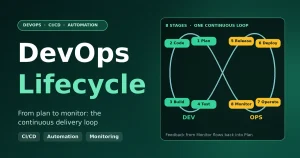
An end-to-end project takes one change from commit to production and back. It needs six parts working together.

Source control comes first, with branch protection and pull request reviews. CI runs tests and builds a container image. A scan step checks the image and its dependencies. Infrastructure as code creates the environment. A deploy step ships the image, ideally through GitOps. Monitoring closes the loop with dashboards and alerts. Add one rollback path and test it. Track deployment frequency and lead time for the project. Those two numbers make the README concrete.
How Do You Build a DevOps Project Without Access to a Paid Cloud Account?
Most DevOps skills can be built on a laptop. The kind tool runs Kubernetes nodes as Docker containers. A control plane and two workers fit on one machine.

Standard GitHub Actions runners are free for public repositories. That covers CI for every project in this list. Real cloud practice is free for a while. AWS gives new accounts up to $200 in credits. Its free plan announcement has the details. The plan ends after six months or when credits run out. Oracle Cloud’s Always Free tier adds Arm compute. It equals 2 OCPUs and 12 GB of memory. Set a budget alert on day one.
What DevOps Projects Actually Impress Recruiters Versus Look Like Tutorial Clones?
Projects impress when they show decisions a tutorial never made. A reviewer spots the difference within minutes.

A tutorial clone usually has one large commit and an unchanged README. It runs only on the author’s machine. Nothing in it explains why each tool was chosen. An original project carries its own reasoning. It names a problem, such as slow builds or noisy alerts. It shows a before and after number. Commit history spans weeks of small pull requests. A failure write-up explains what broke and how it was fixed. Interviewers can question every layer, and the candidate can answer.
Conclusion
Pick one track first: platform, SRE, or DevSecOps. Build one beginner project in it this week, with CI from day one. Then extend that same repo with Kubernetes, monitoring, and a security gate. Write the README last, with real numbers from your own runs.
Frequently Asked Questions (FAQs)
These answers cover the questions learners ask most about DevOps projects.
What Are DevOps Projects?
DevOps projects are practical builds that automate how software ships. They cover building, testing, deploying, and monitoring. Docker, Terraform, and Kubernetes are common choices.
What Are the Best DevOps Projects for Beginners?
Start with a containerized Python app and a GitHub Actions pipeline. Add a Terraform setup next. Each teaches one core skill. Together they form a small delivery system.
Which Tools and Technologies Are Used in DevOps Projects?
Common tools include Git, Docker, Kubernetes, Terraform, Ansible, and Jenkins or GitHub Actions. Prometheus, Grafana, and ELK handle monitoring and logs. Trivy and Falco cover security.
How Can You Build a DevOps Project From Scratch?
Pick a small app and put it in Git. Add a Dockerfile, then a CI workflow. Provision infrastructure with Terraform, deploy it, and add monitoring last.
What Are Some Real-World DevOps Project Ideas?
Strong ideas include a GitOps pipeline with Argo CD and blue-green releases. A DevSecOps pipeline with signed images also works well. So does a Kubernetes cluster with Prometheus alerting.