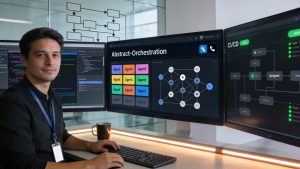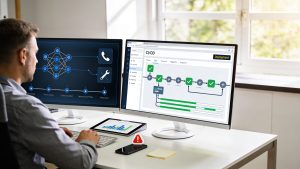
DevOps began as a cultural shift focused on breaking silos between development and operations, but in 2026 it is tightly intertwined with powerful tooling across automation, collaboration, cloud, and observability. Modern practices now extend beyond CI/CD into AI-assisted operations, IoT integrations, and complex hybrid cloud strategies, making tool choice a key part of any DevOps roadmap.
At the heart of this ecosystem are tools that support core DevOps components: cultural alignment, automation, continuous integration and delivery, microservices and containers, and infrastructure as code. Surrounding these are platforms for monitoring and feedback, DevSecOps, version control, agile planning, knowledge sharing, and resilience.
Core DevOps Foundations in 2026
DevOps success still depends on a blend of people, process, and platform, with several foundational themes consistently in focus.
- Culture and collaboration: Teams prioritize shared responsibility between development, operations, security, and business stakeholders, supported by open communication and cross-functional ownership.
- Automation everywhere: Automated build pipelines, tests, deployments, and infrastructure provisioning reduce manual error and improve delivery speed.
- CI and CD: Continuous integration catches issues early by frequently merging and testing code, while continuous delivery keeps software in a deployable state via repeatable release workflows.
- Microservices and containers: Modular architectures and containerization (for example, using Docker) improve scalability and make services easier to deploy and manage.
- Infrastructure as Code (IaC): Declarative infrastructure managed via tools such as Terraform or Ansible enables consistent, auditable environments across dev, test, and production.
On top of these pillars, teams rely on monitoring and feedback loops, integrated security (DevSecOps), robust version control, agile methods, thorough documentation, and design for scalability and resilience.
Collaboration, Version Control, and Build Tools
These tools underpin day-to-day development workflows, code quality, and project governance.
Git (GitLab, GitHub, Bitbucket)
Git continues to be the backbone of modern software collaboration, enabling distributed teams to branch, merge, and review changes efficiently. Its distributed model supports offline work and makes it easy to track who changed what and why, which is crucial for security, audits, and rollback.
Maven
Maven remains a staple in Java-centric ecosystems for managing dependencies, builds, and project lifecycles. By standardizing build steps and integrating with CI pipelines, it helps teams maintain consistent, reproducible artifacts across environments in 2026.
Jenkins
Jenkins is still one of the most widely used automation servers for implementing CI/CD pipelines. Its plugin ecosystem lets teams integrate tests, security checks, packaging, and deployments into a unified, automated workflow tailored to diverse tech stacks.
Gradle
Gradle offers flexible, high-performance build automation suitable for polyglot and multi-module projects. It is particularly valuable in microservices architectures where many components must be built, tested, and deployed in coordinated fashion.
Configuration management, IaC, and scripting
These tools focus on reproducible infrastructure, configuration consistency, and automation of repetitive tasks.
Chef
Chef treats infrastructure as code, using declarative “recipes” and “cookbooks” to define how systems should be provisioned and configured. This approach improves scalability and consistency across servers, clouds, and environments, reducing manual configuration drift.
Puppet
Puppet provides model-driven configuration management for complex, hybrid infrastructures. It enforces desired system states across fleets of servers, helping organizations maintain compliance, security baselines, and consistent configurations.
Ansible
Ansible uses human-readable YAML playbooks and an agentless architecture to orchestrate configuration, deployments, and infrastructure tasks. Its simplicity, plus a large library of modules, makes it a go-to choice for teams automating end-to-end workflows across on-prem and cloud.
Terraform
Terraform enables teams to define infrastructure as code using declarative configuration files that can be versioned and reused. By automating creation, change management, and teardown of resources across clouds and platforms, it supports scalable, repeatable DevOps operations in 2026.
Scripting (Python, Bash, PowerShell)
Scripting languages remain essential for glue code, custom automation, quick utilities, and integrating heterogeneous tools. They allow teams to prototype, orchestrate, and extend DevOps workflows without waiting for full platform features.
Containers, Orchestration, and Cloud Platforms
These tools power elastic infrastructure, microservices, and cloud-native delivery models.
Docker
Docker standardizes how applications and their dependencies are packaged into containers, ensuring consistent behavior from laptop to production. This containerization model reduces environment drift and simplifies scaling and deployment in CI/CD pipelines.
Kubernetes
Kubernetes orchestrates containers at scale, handling scheduling, self-healing, scaling, and networking for microservices. In 2026 it remains central to cloud-native strategies, supporting hybrid and multi-cloud environments with robust resilience features.
AWS, Azure, and GCP (Cloud computing and storage)
The major public clouds provide compute, storage, databases, serverless runtimes, and managed Kubernetes services that underpin DevOps at scale. They integrate natively with CI/CD pipelines, IaC tools, and observability platforms, enabling rapid provisioning, elastic capacity, and global distribution.
Monitoring, APM, Logging, and Observability
Observability and monitoring tools help DevOps teams detect, diagnose, and resolve issues before they affect users.
SignalFx
SignalFx (now part of a larger observability offering) focuses on real-time metrics, distributed tracing, and alerting for cloud-native systems. It helps teams track microservices performance, identify anomalies, and respond quickly to incidents in complex architectures.
AppDynamics
AppDynamics provides application performance monitoring that traces transactions end-to-end across distributed systems. It surfaces latency, errors, and bottlenecks, enabling teams to pinpoint root causes and optimize user experience.
Raygun
Raygun specializes in error tracking and performance monitoring, giving granular insight into crashes, exceptions, and slow operations. This visibility supports faster incident resolution and higher application reliability.
Splunk Cloud
Splunk Cloud offers scalable log analytics and machine data processing, turning logs and events into searchable, visual insights. It is often used for operational monitoring, security analytics, and compliance reporting in data-driven organizations.
ELK (Elasticsearch, Logstash, Kibana)
The ELK stack combines log collection and processing with powerful search and visualization capabilities. It remains a popular choice for building centralized logging and observability platforms that support troubleshooting and capacity planning.
Prometheus
Prometheus is a metrics-focused monitoring system widely used in Kubernetes and microservices environments. By collecting time-series metrics and enabling alerting via expressive queries, it underpins many observability stacks in cloud-native teams.
eG Enterprise
eG Enterprise provides end-to-end performance monitoring for applications and infrastructure, linking user experience to underlying systems. Its diagnostic capabilities help reduce downtime and optimize resource utilization across complex digital ecosystems.
Testing, Resilience, and Incident Management
These tools ensure quality, reliability, and structured response when things go wrong.
Selenium
Selenium is still a cornerstone of automated web UI testing, supporting cross-browser and cross-platform checks. It integrates into CI pipelines to ensure that front-end changes do not break user flows and critical journeys.
Gremlin
Gremlin enables chaos engineering by injecting controlled failures into systems to test resilience and recovery procedures. This proactive approach helps teams discover weaknesses before real outages occur.
Nagios
Nagios continues to provide infrastructure-level monitoring and alerting, especially in mixed or legacy environments. Its plugins and extensibility allow broad coverage of hosts, services, and network health.
Phantom
Phantom automates security workflows, from alert triage to response actions, in security operations centers. By orchestrating tools and playbooks, it shortens incident response times and improves consistency in handling threats.
ServiceNow
ServiceNow underpins IT service management and broader workflow automation, connecting incidents, changes, and requests. It acts as a system of record and coordination hub for operational processes across IT and business teams.
Status page tools
Public and internal status pages give transparent, real-time updates on service health, maintenance, and incidents. They help manage stakeholder expectations, maintain trust, and reduce support load during outages.
Collaboration, Planning, and CI/CD Platforms
These tools reinforce communication, Agile delivery, and integrated pipelines.
Slack
Slack supports real-time messaging, file sharing, and integrations, becoming a central hub for DevOps collaboration. It is frequently wired into alerting, deployments, and incident channels to improve situational awareness and response.
GitLab CI/CD
GitLab’s integrated CI/CD capabilities automate building, testing, and deploying code directly from a single platform. This tight integration with source control simplifies pipeline management and reduces friction in the delivery process.
Jira
Jira provides issue tracking, sprint planning, and reporting for Agile and DevOps teams. Its configurable workflows and rich integration ecosystem make it a common choice for coordinating work across development and operations.
Environments, Error Tracking, and End-to-End Visibility
These tools help standardize environments and keep applications healthy in production.
Vagrant
Vagrant automates the creation of consistent, reproducible development environments, often using virtual machines or containers. This reduces “works on my machine” problems and speeds onboarding for new team members.
Sentry
Sentry offers real-time error monitoring that links stack traces to specific releases and user sessions. It enables teams to prioritize and fix the most impactful issues quickly, improving software stability.
Building a Future-Ready DevOps Stack in 2026
In 2026, organizations that succeed with DevOps are the ones that combine cultural practices with a thoughtfully designed toolchain spanning source control, CI/CD, cloud, IaC, monitoring, security, and collaboration. For professionals, mastering these tools—alongside core concepts like automation, observability, and reliability engineering—remains a powerful way to advance in cloud and DevOps roles.
Read more such articles from our Newsletter here.