
As applications evolve from single-codebase systems into distributed architectures, the way services communicate becomes a critical design decision. APIs are no longer just about exposing data to a frontend. They now connect dozens (or hundreds) of internal services, often under strict performance and reliability constraints.
This shift is why comparisons like grpc vs restful and rest vs grpc matter more today than ever before. The choice between REST and gRPC directly affects latency, scalability, developer experience, and long-term maintainability.
Rather than asking which approach is “better,” engineering teams need to understand where each fits best. This blog breaks down rest vs grpc from a system-design and coding perspective, helping you choose the right API style for your application.
What Is a REST API?
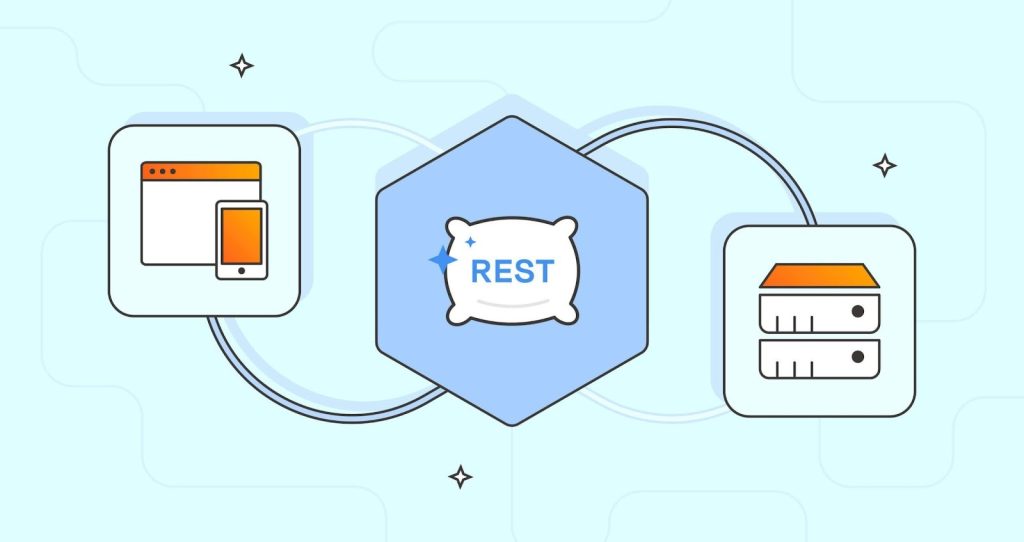
A REST API follows the Representational State Transfer architectural style and is built on standard HTTP protocols. In REST, systems expose resources through URLs, and operations are performed using HTTP methods such as GET, POST, PUT, and DELETE.
REST APIs are stateless, meaning each request is independent and contains all the information required to process it. JSON is the most common data format, making REST APIs easy to read, debug, and consume.
@app.route(“/users/<id>”, methods=[“GET”])
def get_user(id):
return {“id”: id, “name”: “Alice”}
REST’s simplicity and widespread support are major reasons it dominates many grpc vs restful discussions, especially for public-facing APIs.
What Is gRPC?
gRPC is a high-performance Remote Procedure Call framework developed by Google. Instead of using text-based formats like JSON, gRPC relies on Protocol Buffers (Protobuf), a compact binary serialization format.
In gRPC, APIs are defined as services with explicitly defined methods and message schemas. Communication happens over HTTP/2, enabling features such as multiplexing, bidirectional streaming, and reduced latency.
service UserService {
rpc GetUser (UserRequest) returns (UserResponse);
}
Because of its efficiency and strong typing, gRPC is often favored in rest vs grpc decisions involving internal microservices and performance-critical systems.
Key Differences Between gRPC and REST
At a fundamental level, grpc vs restful is a comparison between readability and efficiency.
REST APIs are resource-oriented, loosely typed, and human-readable. gRPC APIs are method-oriented, strongly typed, and optimized for machine-to-machine communication.
Conceptually, the difference looks like this:
# REST
GET /users/123
# gRPC
GetUser(id=”123″)
In rest vs grpc architecture discussions, REST prioritizes accessibility, while gRPC prioritizes performance and structure.
Pros and Cons
Every architectural choice comes with trade-offs. Understanding these trade-offs is essential when evaluating grpc vs restful.
Pros of REST APIs
- Widespread adoption and ecosystem maturity
REST is the most commonly used API style, supported by nearly every programming language, framework, and cloud platform. - Excellent developer experience
JSON-based responses are human-readable, easy to debug, and simple to test using tools like Postman, cURL, and browser-based clients. - Stateless and scalable by design
REST’s stateless nature makes horizontal scaling straightforward, especially in cloud-native and microservices architectures. - Strong compatibility with HTTP standards
REST works seamlessly with caching, authentication headers, status codes, and existing web infrastructure. - Ideal for public and client-facing APIs
Because of its simplicity and transparency, REST is well-suited for APIs consumed by web, mobile, and third-party applications.
Cons of REST APIs
- Higher payload size
JSON is verbose compared to binary protocols, which can impact performance in high-throughput or low-latency systems. - Limited support for real-time communication
REST relies on request–response patterns, making real-time updates harder without additional technologies like WebSockets. - Weaker contract enforcement
REST APIs often lack strict schema enforcement, increasing the risk of breaking changes without strong versioning discipline. - Less efficient for internal service-to-service communication
In large microservices systems, REST can become slower and more resource-intensive compared to protocol-based alternatives like gRPC.
Pros of gRPC
- High throughput and low latency
gRPC uses Protocol Buffers (Protobuf) for binary serialization, significantly reducing payload size and improving network efficiency. - Strongly typed contracts
Protobuf enforces strict API schemas, reducing ambiguity and preventing breaking changes through clearly defined service contracts. - HTTP/2-based communication
Built on HTTP/2, gRPC supports multiplexing, header compression, and persistent connections for faster data exchange. - Built-in streaming support
Supports unary, server-streaming, client-streaming, and bidirectional streaming – ideal for real-time data flows. - Excellent fit for microservices
gRPC excels in internal service-to-service communication where performance, reliability, and consistency are critical. - Multi-language support with code generation
Automatically generates client and server stubs across multiple languages, improving development speed and consistency.
Cons of gRPC
- Steeper learning curve
Developers must understand Protobuf definitions, service contracts, and gRPC tooling, which adds initial complexity. - Limited browser support
Native gRPC is not fully supported in browsers, often requiring gRPC-Web or additional proxies. - Harder to debug manually
Binary payloads are not human-readable, making debugging more difficult without specialized tools. - Less suitable for public APIs
Due to complexity and tooling requirements, gRPC is generally not ideal for simple, external, or consumer-facing APIs. - Infrastructure overhead
Requires additional setup for load balancing, monitoring, and observability compared to simpler REST-based systems.
When to Use gRPC vs REST
Choosing between grpc vs restful depends on the audience, system design, and performance requirements.
REST is typically the better choice when building public APIs, supporting web and mobile clients, or prioritizing ease of integration.
if api_type == “external”:
use_rest()
gRPC is more suitable for internal service-to-service communication, especially in microservices architectures where performance and strong contracts are important.
if system_architecture == “microservices”:
use_grpc()
In real-world systems, rest vs grpc is often not an either-or decision. Many teams use REST externally and gRPC internally.
Conclusion
The comparison of grpc vs restful is ultimately about context, not superiority. REST APIs remain a strong choice for public-facing services due to their simplicity, flexibility, and universal compatibility. gRPC excels in internal systems where efficiency, low latency, and strict contracts are critical.
In most modern architectures, the smartest approach to rest vs grpc is a hybrid one using REST where accessibility matters and gRPC where performance matters.
By aligning your API strategy with your system’s needs and your team’s capabilities, you can build services that are scalable, maintainable, and future-ready.