
What is the Difference Between Lead Time and Cycle Time? (Quick Answer)
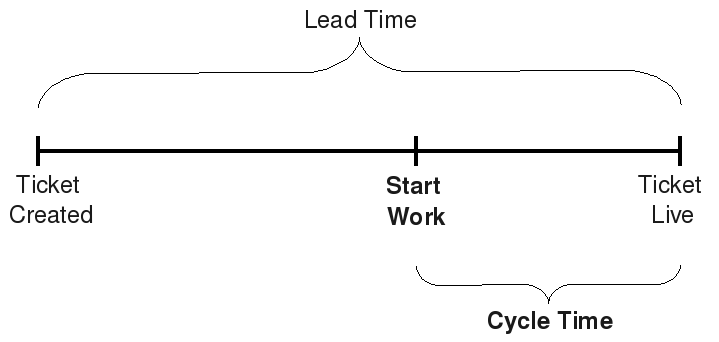
The difference between lead time and cycle time lies in when the clock starts and what part of the workflow is measured.
- Lead Time measures the total time from when a request is made until it is delivered.
- Cycle Time measures the time taken to complete work after it has started.
In simple terms:
Lead Time = Request to Delivery
Cycle Time = Work Start to Completion
For example, if a feature request is created on Day 1 but development starts on Day 3 and finishes on Day 6:
- Lead Time = 5 days
- Cycle Time = 3 days
What is Lead Time in Agile and Software Development?
Lead time represents the total time it takes for a feature, bug fix, or task to move from initial request to final delivery.
It includes:
- Backlog waiting time
- Analysis and planning
- Development
- Testing
- Deployment
For example, consider a feature request tracked in code:
const feature = {
createdAt: “2024-01-01”,
startedAt: “2024-01-03”,
completedAt: “2024-01-06”
};
Lead time calculation:
function calculateLeadTime(feature) {
return new Date(feature.completedAt) – new Date(feature.createdAt);
}
Lead time reflects the customer perspective, as it includes waiting time before work begins.
What is Cycle Time in Agile and Software Development?
Cycle time measures the time taken to complete work once it has started. It focuses only on the active development phase.
It includes:
- Development
- Code review
- Testing
- Deployment
Example:
function calculateCycleTime(feature) {
return new Date(feature.completedAt) – new Date(feature.startedAt);
}
Cycle time reflects the team’s efficiency in delivering work.
Lead Time vs Cycle Time: Key Differences Explained
The key differences can be understood through practical context:
Start Point
- Lead Time starts when a request is created
- Cycle Time starts when work begins
Scope
- Lead Time includes waiting time
- Cycle Time includes only active work
Perspective
- Lead Time is customer-focused
- Cycle Time is team-focused
Example
const task = {
created: 1,
started: 3,
completed: 6
};
// Lead Time = 6 – 1 = 5
// Cycle Time = 6 – 3 = 3
Lead Time vs Cycle Time vs Throughput: What’s the Difference?
Along with lead time and cycle time, throughput is another important metric.
- Lead Time → Total time from request to delivery
- Cycle Time → Time spent actively working
- Throughput → Number of tasks completed in a given time
Example:
const completedTasks = 20;
const days = 5;
const throughput = completedTasks / days; // 4 tasks per day
These metrics together provide a complete picture of team performance.
Lead Time for Changes vs Cycle Time Explained
In DevOps, lead time for changes specifically measures how long it takes for code changes to reach production.
Example:
const change = {
commitTime: “2024-01-01”,
deployTime: “2024-01-02”
};
function leadTimeForChanges(change) {
return new Date(change.deployTime) – new Date(change.commitTime);
}
Cycle time, in this context, would measure how long the development process took before deployment.
Why Lead Time and Cycle Time Matter in Agile and DevOps
These metrics are critical for improving delivery performance.
They help teams:
- Identify bottlenecks
- Improve delivery speed
- Enhance predictability
- Optimize workflows
For example, long lead time may indicate delays in backlog or approvals, while long cycle time may indicate inefficiencies in development.
How to Measure Lead Time and Cycle Time
Both metrics can be measured using timestamps in tracking systems.
Example:
function measureTimes(task) {
const leadTime =
new Date(task.completed) – new Date(task.created);
const cycleTime =
new Date(task.completed) – new Date(task.started);
return { leadTime, cycleTime };
}
In real-world systems, tools like Jira or Git track these timestamps automatically.
Real-World Examples of Lead Time vs Cycle Time
Example 1: Feature Development
const feature = {
created: “Day 1”,
started: “Day 4”,
completed: “Day 8”
};
- Lead Time = 7 days
- Cycle Time = 4 days
Example 2: Bug Fix
const bug = {
created: “Day 1”,
started: “Day 2”,
completed: “Day 3”
};
- Lead Time = 2 days
- Cycle Time = 1 day
Example 3: Deployment Delay
const deployment = {
created: “Day 1”,
started: “Day 2”,
completed: “Day 6”
};
Long lead time may indicate deployment bottlenecks.
You may also like: AI in Agile Project Management: Tools, Trends, and Use Cases
Common Mistakes When Measuring Lead Time and Cycle Time
Ignoring Waiting Time
Teams often overlook delays before development starts.
Incorrect Start Points
Misidentifying when work begins leads to inaccurate cycle time.
Mixing Metrics
Confusing lead time with cycle time leads to poor insights.
Not Tracking Data
Without proper tracking, metrics become unreliable.
How to Improve Lead Time and Cycle Time
Reduce Waiting Time
Start work sooner by improving backlog refinement.
Automate Processes
npm run deploy
Automation reduces delays in deployment.
Improve Code Reviews
// Faster review process
approvePullRequest();
Break Down Tasks
Smaller tasks are completed faster.
Best Practices for Optimizing Lead Time and Cycle Time
- Maintain a well-prioritized backlog
- Use continuous integration and deployment
- Monitor workflow bottlenecks
- Limit work in progress (WIP)
- Track metrics consistently
Example:
const WIP_LIMIT = 5;
- Encourage team collaboration
- Regularly review performance metrics
Conclusion: Lead Time vs Cycle Time Explained
Lead time and cycle time are essential metrics in Agile and DevOps that help teams understand and improve their delivery performance. While lead time provides a customer-focused view of how long it takes to deliver value, cycle time focuses on the efficiency of the development process.
By tracking and optimizing both metrics, teams can identify bottlenecks, improve workflow efficiency, and deliver features faster and more reliably. Combined with metrics like throughput, they provide a comprehensive view of system performance.
In modern software development, where speed and quality are critical, understanding and optimizing lead time and cycle time is key to building high-performing teams and delivering consistent value to users.
Frequently Asked Questions About Lead Time vs Cycle Time
What is lead time vs cycle time?
Lead time measures total time from request to delivery, while cycle time measures time taken to complete work after it starts.
What is the difference between lead time and cycle time in agile?
Lead time includes waiting and development time, while cycle time includes only active work time.
What is lead time for changes vs cycle time?
Lead time for changes measures time from code commit to deployment, while cycle time measures development duration.
How do you calculate lead time and cycle time?
By subtracting timestamps: lead time uses request to completion, while cycle time uses start to completion.
What is the difference between lead time, cycle time, and throughput?
Lead time measures total delivery time, cycle time measures active work duration, and throughput measures the number of tasks completed over time.