
What is the Definition of Ready in Agile? (Quick Answer)
The Definition of Ready (DoR) in Agile is a set of criteria that a user story or task must meet before it is considered ready for development. It ensures that the team has enough clarity, detail, and context to begin work without ambiguity.
In simple terms, it answers: “Is this work item ready to be picked up by the development team?”
For example, a user story like:
User Story: Implement login functionality
is not ready unless it includes clear requirements, acceptance criteria, and dependencies.
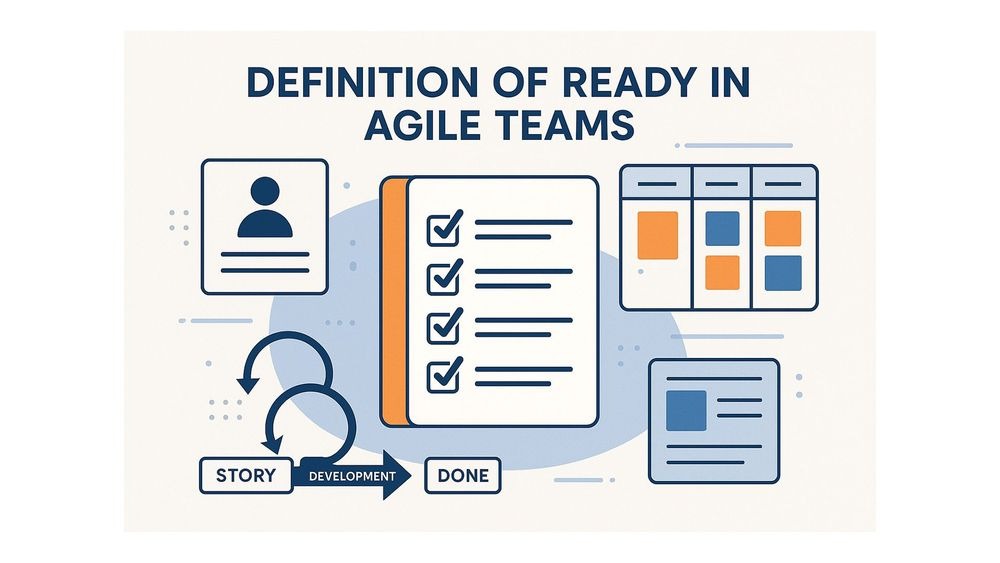
What is the Definition of Ready in Agile Methodology?
In Agile methodology, the Definition of Ready acts as a quality gate before development begins. It ensures that user stories are well-defined, properly estimated, and free from major blockers.
A typical “ready” user story includes:
- Clear description
- Defined acceptance criteria
- Identified dependencies
- Estimated effort
- Testable requirements
For example, a refined user story:
// Acceptance criteria (pseudo representation)
const loginCriteria = {
validLogin: “User is redirected to dashboard”,
invalidLogin: “Error message is displayed”
};
This level of clarity ensures developers and testers understand what needs to be built and validated.
Why is Definition of Ready Important in Agile?
The Definition of Ready is critical because it prevents confusion, rework, and delays during development.
It helps teams:
- Start work with clear requirements
- Reduce back-and-forth communication
- Improve sprint predictability
- Minimize defects caused by ambiguity
For instance, unclear requirements can lead to incorrect implementation:
// Ambiguous requirement leads to incorrect logic
function login(user, pass) {
return true; // No validation logic
}
A proper Definition of Ready would prevent such issues by ensuring requirements are fully defined.
Key Components of Definition of Ready
A strong Definition of Ready typically includes several essential components:
1. Clear User Story
User Story: As a user, I want to log in so that I can access my account
2. Acceptance Criteria
const acceptanceCriteria = [
“User enters valid credentials → success”,
“User enters invalid credentials → error message”
];
3. Defined Scope
The feature should have a well-defined boundary with no ambiguity.
4. Dependencies Identified
For example:
const dependencies = [“Authentication API”, “Database access”];
5. Estimation Completed
Story points or effort estimation should be assigned.
6. Testability
The feature should be testable with clear expected outcomes.
Definition of Ready vs Definition of Done: What is the Difference?
The Definition of Ready and Definition of Done serve different purposes in Agile.
- Definition of Ready ensures work is prepared before development
- Definition of Done ensures work is complete after development
Example:
// Ready: requirements defined
const ready = true;
// Done: feature implemented and tested
const done = true;
In practice:
- DoR focuses on input quality
- DoD focuses on output quality
Who Defines the Definition of Ready in Agile Teams?
The Definition of Ready is typically defined collaboratively by the Agile team, including:
- Product Owner
- Developers
- QA/Testers
- Scrum Master
For example, a shared checklist:
const definitionOfReady = {
description: true,
acceptanceCriteria: true,
dependencies: true,
estimation: true
};
This ensures alignment across all stakeholders.
When is a User Story Considered Ready?
A user story is considered ready when it meets all the criteria defined in the Definition of Ready.
Example checklist:
function isReady(story) {
return (
story.description &&
story.acceptanceCriteria &&
story.estimated &&
!story.blockers
);
}
If all conditions are satisfied, the story can be picked up in a sprint.
Examples of Definition of Ready in Agile
Example 1: Login Feature
User Story: User login
Acceptance Criteria:
– Valid credentials → success
– Invalid credentials → error
Dependencies: Auth API
Example 2: API Development
// API contract defined before development
const apiSpec = {
endpoint: “/users”,
method: “GET”,
response: “List of users”
};
Example 3: UI Feature
// UI requirement clarity
const uiRequirement = {
button: “Submit”,
action: “Send form data”,
validation: “Required fields”
};
Common Mistakes When Using Definition of Ready
Too Vague Criteria
Unclear DoR leads to confusion.
Overly Strict Rules
Excessive criteria can slow down development.
Ignoring Team Input
DoR should be collaborative, not imposed.
Not Updating DoR
As projects evolve, DoR should also evolve.
Treating DoR as Mandatory Gate
It should guide, not block progress unnecessarily.
Best Practices for Creating an Effective Definition of Ready
- Keep it simple and practical
- Ensure clarity and testability
- Involve the entire team
- Review and update regularly
- Align with business goals
Example reusable checklist:
const DoRChecklist = [
“Clear description”,
“Acceptance criteria defined”,
“Dependencies identified”,
“Test cases possible”
];
- Avoid over-documentation
- Focus on enabling smooth development
Definition of Ready in Scrum and Agile Frameworks
In Scrum, the Definition of Ready is not officially mandated but is widely adopted as a best practice.
It supports:
- Sprint planning
- Backlog refinement
- Team alignment
Example during backlog refinement:
backlog.forEach(story => {
if (!isReady(story)) {
console.log(“Refine story before sprint”);
}
});
Other Agile frameworks also use similar readiness criteria to ensure quality input into development cycles.
You may also like:
What is a Spike in Agile? Purpose, Process, and Best Practices
Your Ultimate Backlog Refinement Guide
Conclusion: Definition of Ready Explained
The Definition of Ready is a crucial concept in Agile that ensures work items are properly prepared before development begins. By establishing clear criteria for readiness, teams can reduce ambiguity, improve efficiency, and deliver higher-quality software.
In modern Agile environments, where speed and collaboration are essential, the Definition of Ready acts as a safeguard against poorly defined requirements. It enables smoother sprint execution, better communication, and more predictable outcomes.
When used effectively, the Definition of Ready becomes a powerful tool that aligns teams, improves productivity, and ensures that development efforts are focused on well-understood and valuable work.
Frequently Asked Questions About Definition of Ready
What is the definition of ready in agile?
It is a set of criteria that a user story must meet before it is ready for development.
What is an example of the definition of ready?
A story with clear description, acceptance criteria, dependencies, and estimation completed.
Who is responsible for the definition of ready?
The entire Agile team collaboratively defines it.
Is the definition of ready mandatory in agile?
No, but it is widely used as a best practice.
What is the difference between definition of ready and definition of done?
Definition of Ready ensures work is prepared before development, while Definition of Done ensures work is complete after development.