A backend developer roadmap starts with one programming language, data structures, web fundamentals, databases, and APIs before progressing to authentication, testing, deployment, and production systems. The most effective roadmap for a backend developer combines structured learning with hands-on projects. Building and deploying working applications helps demonstrate practical skills to potential employers.
Becoming job-ready requires more than learning frameworks. Developers also need to understand security, debugging, version control, system reliability, and how applications behave in production.
What is Backend Development?
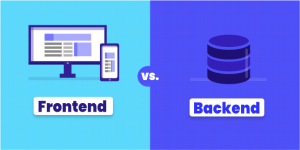
Backend development involves building the server-side components that power websites, mobile applications, and software platforms. It focuses on processing requests, implementing business logic, managing data, enforcing security, and communicating with other services. Consider an online shopping application. When a customer places an order, the frontend collects the information and sends a request to the backend. The backend validates the request, checks product availability, calculates the total, processes the order, and coordinates payment and inventory updates.
A backend application typically includes a programming language, a framework, a database, APIs, and infrastructure for running the application. For example, a simple backend endpoint using Python and Flask could look like this:
from flask import Flask, jsonify
app = Flask(__name__)
@app.route(“/api/health”)
def health_check():
return jsonify({“status”: “healthy”})
if __name__ == “__main__”:
app.run()
This application exposes an endpoint that returns a health status. It demonstrates the basic idea of handling an HTTP request and returning a response. Real applications require additional work, including data persistence, authentication, validation, error handling, testing, and production deployment.
Backend development becomes more complex as applications grow. Developers may need to handle thousands of concurrent requests, coordinate multiple services, prevent unauthorized access, optimize database queries, and recover from infrastructure failures.
A strong learning path builds these skills progressively instead of attempting to master every backend technology at once.
Who is a Backend Developer?
A backend developer designs, builds, tests, and maintains the server-side functionality of an application. The role involves translating business requirements into reliable software that can process data and support user-facing features. Typical responsibilities include:
- Writing server-side code using languages such as Python, Java, JavaScript, PHP, Go, or C#.
- Building APIs that allow applications and services to communicate.
- Designing database schemas, writing queries, and optimizing data access.
- Implementing authentication, authorization, and other security controls.
- Writing automated tests and debugging application failures.
- Deploying applications and monitoring their performance.
- Collaborating with frontend developers, designers, QA engineers, DevOps teams, and product managers.
Backend developers may also work on distributed systems, cloud infrastructure, event-driven applications, and high-volume data processing as they gain experience. The role does not require every developer to become an infrastructure specialist. However, understanding how applications are deployed, monitored, and secured is increasingly important for building dependable software.
What prerequisites do I need before starting a backend developer roadmap?
You do not need to know several programming languages or have an advanced computer science degree before starting. A basic understanding of computers and a willingness to practise consistently are sufficient to begin. Some foundations make the learning process easier.
1. Basic computer skills
You should be comfortable installing software, managing files, using a code editor, and working with a terminal. You will use these skills to run programs, install dependencies, execute tests, and troubleshoot errors.
2. Basic programming knowledge
If you have never programmed before, begin with variables, data types, conditions, loops, functions, and basic collections. For example:
def calculate_total(price, quantity):
if price < 0 or quantity < 0:
raise ValueError(“Values cannot be negative”)
return price * quantity
print(calculate_total(500, 3))
This function accepts two inputs, validates them, and calculates a total. Similar logic appears in backend applications when processing orders, calculating fees, or validating user input.
3. Basic mathematics and logical thinking
You do not need advanced mathematics for most entry-level backend roles. However, logical reasoning, problem-solving, and basic arithmetic are useful. As you progress, familiarity with algorithmic complexity, data structures, and discrete mathematics can help with technical interviews and performance-related decisions.
4. Basic internet knowledge
Learn what clients and servers are, how HTTP requests work, what IP addresses and ports represent, and how DNS translates domain names into network addresses. These concepts become easier to understand when you start building APIs and deploying applications.
5. A computer and a consistent schedule
A typical laptop is enough for learning programming, databases, Git, and basic deployment. You can use free development tools and local databases before spending money on cloud services or certifications. If you are completely new to programming, spend the first few weeks learning one language and practising small exercises. If you already know a programming language, move more quickly into HTTP, databases, and API development.
Backend Developer Roadmap 2026
The following backend developer roadmap takes you from programming fundamentals to building, deploying, and applying for backend development roles.
The timeline is illustrative. Someone studying consistently for 10–15 hours a week may need several months to build a solid foundation, while someone with existing programming experience may progress faster.
1. Learn basic coding skills
Start by choosing one programming language and learning it well enough to build small programs without copying every line from a tutorial.
Suitable choices include:
- Python: Readable syntax and a broad ecosystem for web development, automation, and data processing.
- JavaScript with Node.js: Useful if you already know JavaScript or want to work with the same language on the frontend and backend.
- Java: A strong option for enterprise applications, large backend systems, and Spring Boot development.
- C#: Suitable for backend applications built with ASP.NET Core and the .NET ecosystem.
- PHP: Useful for web development, content platforms, and applications built with frameworks such as Laravel.
Choose based on your interests, the jobs you want to pursue, and the technologies used by employers in your target market. Do not spend weeks searching for the perfect language. Focus on variables, data types, operators, conditions, loops, functions, modules, exceptions, collections, and file handling. Learn how to install packages and organize code into reusable components. For example, a Python program can process a list of orders:
orders = [
{“id”: 101, “amount”: 1200},
{“id”: 102, “amount”: 800},
{“id”: 103, “amount”: 1500}
]
total_revenue = sum(order[“amount”] for order in orders)
print(f”Total revenue: {total_revenue}”)
This small program introduces collections, dictionaries, iteration, and aggregation. These are fundamental concepts you will use when processing database records and API requests.
Milestone: Build a command-line application, such as an expense tracker, a contact manager, or a program that reads a file and generates a report.
2. Master data structures and algorithms
Data structures organize information, while algorithms describe how to process it. Understanding both helps you write efficient code and solve common technical interview problems.
Start with:
- Arrays and lists.
- Strings and string manipulation.
- Hash maps and sets.
- Stacks and queues.
- Linked lists and trees.
- Searching and sorting.
- Recursion.
- Basic graph traversal.
- Time and space complexity.
You do not need to master every advanced algorithm before building backend applications. Prioritize the structures and techniques that help you solve everyday programming problems, then practise more advanced topics as your target roles require them.
For example, a hash map can help retrieve a product by its identifier without scanning every product in a list.
products = {
101: {“name”: “Laptop”, “price”: 55000},
102: {“name”: “Keyboard”, “price”: 1500},
103: {“name”: “Monitor”, “price”: 12000}
}
product = products.get(102)
if product:
print(product[“name”])
This approach uses a dictionary for key-based lookup. In typical cases, hash map lookup takes constant average time, although actual performance depends on implementation and collisions. Understanding these concepts helps when working with caches, database indexes, queues, and application data.
Milestone: Solve basic programming problems independently and explain why you chose a particular data structure or algorithm.
3. Learn the basics of the web
Backend developers need to understand how applications communicate over networks. This knowledge helps when designing APIs, debugging requests, and deploying services. Focus on the following concepts:
- HTTP and HTTPS: Understand requests, responses, headers, status codes, methods, and secure communication.
- DNS: Learn how domain names resolve to IP addresses.
- IP addresses and ports: Understand how network services are addressed and how applications listen for connections.
- JSON: Learn how data is represented and exchanged between applications.
- Cookies and sessions: Understand how applications maintain state across requests.
- TLS: Learn the basic role of encryption and certificate validation in secure communication.
- Common HTTP methods: Understand GET, POST, PUT, PATCH, and DELETE, including when each is appropriate.
For example, a client might send a request to retrieve a product:
GET /api/products/101 HTTP/1.1
Host: example.com
Accept: application/json
The backend may respond with a successful status and a JSON representation of the product:
{
“id”: 101,
“name”: “Laptop”,
“price”: 55000
}
The examples illustrate the structure of an HTTP exchange. In a real application, the backend must verify that the product exists and that the requester is authorized to access it when access restrictions apply.
Milestone: Explain how a browser or mobile application sends a request to a backend and receives a response.
4. Get started building simple web servers
Once you understand programming and HTTP, start building a server using a backend framework.
Choose one framework that matches your language:
- Python: Flask, Django, or FastAPI.
- JavaScript: Express or NestJS.
- Java: Spring Boot.
- PHP: Laravel.
- C#: ASP.NET Core.
- Go: The standard net/http package or a suitable framework.
Learn routing, request handling, response formatting, input validation, middleware, configuration, and error handling.
A simple API using FastAPI might look like this:
from fastapi import FastAPI, HTTPException
app = FastAPI()
tasks = {
1: {“title”: “Learn HTTP”, “completed”: False},
2: {“title”: “Build an API”, “completed”: True}
}
@app.get(“/tasks/{task_id}”)
def get_task(task_id: int):
task = tasks.get(task_id)
if task is None:
raise HTTPException(
status_code=404,
detail=”Task not found”
)
return {“id”: task_id, **task}
This example creates an endpoint that retrieves a task by its identifier. The data is stored in memory, so it will not persist across application restarts. Later, you will replace this temporary storage with a database.
As you practise, learn to return appropriate status codes, handle invalid inputs, separate business logic from routing code, and avoid exposing internal errors to users.
Milestone: Build a basic REST API that supports creating, reading, updating, and deleting records.
5. Learn database fundamentals
Most backend applications need to store information beyond the lifetime of a single process. Databases provide persistent storage and mechanisms for querying, updating, and protecting that information. Start with a relational database such as PostgreSQL or MySQL. Learn tables, columns, primary keys, foreign keys, constraints, joins, aggregation, indexes, and transactions. For example, a task application might use a table like this:
CREATE TABLE tasks (
id SERIAL PRIMARY KEY,
title VARCHAR(200) NOT NULL,
completed BOOLEAN NOT NULL DEFAULT FALSE
);
You can then insert and retrieve records:
INSERT INTO tasks (title)
VALUES (‘Learn database indexing’);
SELECT id, title, completed
FROM tasks
WHERE completed = FALSE;
Learn why indexes can improve query performance, why excessive indexing can slow writes, and how transactions protect related operations from being partially completed. After gaining confidence with SQL, learn how your chosen framework connects to a database. You may use an object-relational mapper (ORM), a query builder, or parameterized SQL. You should also understand database migrations, connection pooling, backups, and basic query optimization. Once you are comfortable with relational databases, explore NoSQL systems such as MongoDB or DynamoDB to understand when document or key-value models are appropriate.
Milestone: Connect your API to a persistent database and implement CRUD operations with proper validation and error handling.
6. Deploy projects to your professional portfolio
A project that runs only on your laptop demonstrates less than an application that someone else can access, test, and review. Learn the basics of Git, environment variables, Linux commands, application configuration, deployment, and logging. Then deploy a project using a suitable platform. You do not need to master Kubernetes or complex cloud architecture at this stage. Start with a simple deployment, then learn containers and cloud services as your projects become more demanding. Your portfolio should include two or three projects that demonstrate different backend skills.
Project 1: Task management API
Build an API with user accounts, CRUD operations, database persistence, validation, and automated tests.
Project 2: E-commerce backend
Add product management, inventory, orders, authentication, pagination, and search. Include transaction handling for operations that update related records.
Project 3: URL shortener or booking system
Implement unique identifiers, redirects or reservation workflows, rate limiting, and appropriate handling of duplicate requests. A booking system can demonstrate how you prevent two users from reserving the same resource.
Each project should include a README explaining the architecture, setup instructions, API endpoints, environment variables, test commands, and deployment details.
Milestone: Deploy at least one complete application, publish its code repository, and make it easy for another developer to run or test it.
7. Start looking for a backend job
You do not have to wait until you know every technology on the roadmap. Start applying when you can build, test, explain, and deploy a small backend application independently. Before applying, review the job descriptions for the roles you want. Look for recurring requirements such as Python and Django, Java and Spring Boot, Node.js and TypeScript, SQL, REST APIs, Git, and cloud deployment. Prepare to discuss your projects in detail. Employers may ask why you chose a particular database, how you handle errors, how authentication works, how you test endpoints, or what you would change if traffic increased.
Practise the following:
- Basic data structures and algorithms.
- SQL queries and database design.
- HTTP, REST, and API error handling.
- Authentication and authorization.
- Unit and integration testing.
- Debugging and reading logs.
- Basic system design for common applications.
- Explaining trade-offs in your own projects.
Tailor your resume to demonstrate practical work rather than listing every technology you have briefly encountered. For example, a stronger project description is: “Built and deployed a REST API using FastAPI and PostgreSQL, with JWT-based authentication, input validation, automated tests, and pagination.” Only claim skills and features you have actually implemented and can explain.
What’s the best way to learn Backend? Course, Self-study or Certification?
There is no single best learning method for everyone. The right approach depends on your budget, preferred learning style, current experience, and how much structure you need.
Structured courses
Courses provide a defined curriculum, guided exercises, and an organized sequence of topics. They can be especially useful for beginners who struggle to decide what to learn first. Choose courses that include practical assignments, database integration, API development, testing, and deployment. A course that only explains concepts without requiring you to build anything may leave gaps in your practical skills.
Self-study
Self-study offers flexibility and can be inexpensive. You can combine official documentation, books, tutorials, coding exercises, and personal projects. The main challenge is maintaining direction. Without a structured plan, it is easy to jump between frameworks or spend too much time watching tutorials without writing code. Set a clear outcome for each learning stage and build something that demonstrates what you have learned.
Certifications
Certifications can help demonstrate familiarity with a particular technology or platform, especially for roles involving cloud infrastructure and enterprise tools. However, a certification does not automatically prove that you can design a database, debug an API, or build a reliable application. It is most useful when combined with hands-on experience and projects.
Which approach should you choose?
For most beginners, a practical combination works well: follow one structured course, consult official documentation when you encounter questions, and build projects alongside the lessons. Consider certifications after you understand the fundamentals and have a specific reason to pursue one, such as a cloud-focused role or an employer requirement. The most important measure of progress is not the number of courses completed. It is what you can build and explain independently.
Additional backend developer skills to learn while searching for a job
Once you have the core skills needed to build an API, use the job-search period to strengthen the areas that distinguish a tutorial project from a maintainable application.
Core foundations
- Revisit programming fundamentals, data structures, algorithms, Git, Linux, and command-line tools.
- Practise debugging unfamiliar code, reading error messages, understanding stack traces, and writing functions that are easy to test.
- You should also understand basic software design principles, including separation of concerns, modularity, and dependency management.
Backend development essentials
Strengthen your understanding of REST API design, HTTP status codes, validation, pagination, database integration, and error handling. Learn authentication and authorization, password hashing, secure session management, and common web security risks. Understand why database queries should use parameters rather than unsafe string concatenation. For example, a parameterized SQL query separates the query structure from user-provided data:
cursor.execute(
“SELECT id, name FROM users WHERE email = %s”,
(email,)
)
The placeholder syntax depends on the database driver. This example illustrates the parameterized-query pattern; the application must still handle database errors and enforce the appropriate access rules.
Learn how to write unit tests for individual functions and integration tests that verify interactions between your API and its database.
Writing maintainable software
Writing code that works is only the first step. Backend developers also need to make code understandable, testable, and safe to change.
Practise:
- Naming functions and variables clearly.
- Separating business rules from HTTP handling.
- Avoiding unnecessary duplication.
- Managing dependencies and configuration.
- Using meaningful exceptions and error responses.
- Writing unit and integration tests.
- Reviewing code and documenting important decisions.
Learn design patterns when they solve a real problem rather than trying to apply every pattern to every application.
Cloud infrastructure and deployment
Learn how applications run outside your development machine. Start with environment variables, process management, Linux basics, application logs, and a simple deployment. Then learn Docker to package applications consistently. Choose one cloud platform, such as AWS, Google Cloud, or Microsoft Azure, and understand its basic compute, networking, database, and identity services. You should be able to explain how your application is deployed, how its configuration is supplied, how secrets are protected, and how a new version can be released safely.
Networking and scaling systems
As applications grow, performance depends on more than the speed of individual functions. Learn how DNS, TCP, TLS, HTTP, connection pooling, reverse proxies, and load balancing affect communication. Understand the difference between vertical scaling, which increases the resources of a machine, and horizontal scaling, which adds more instances.
Next, explore caching, background jobs, queues, and rate limiting. For example, a slow report might be moved to a background worker so that the API can acknowledge the request without waiting for the entire report to finish. Do not introduce distributed systems complexity without a clear need. First learn how to build a well-structured application, then understand when separating responsibilities across services becomes useful.
Reliability and production operations
Backend developers should understand what happens when an application encounters errors in production. Learn structured logging, application metrics, health checks, timeouts, retries, and graceful shutdown. Understand why retries can create duplicate operations and why some operations need idempotency safeguards. For example, a payment request should not charge a customer twice simply because the client retries after a network timeout. Idempotency keys and careful transaction design can help prevent this problem.
Explore CI/CD pipelines so that code changes can be tested and deployed consistently. Learn how to monitor error rates, response times, resource usage, and database health.
Advanced specializations
After developing a strong foundation, choose advanced topics based on the type of backend work you want to pursue.
- Microservices: Service boundaries, service discovery, inter-service communication, and distributed transactions.
- Distributed systems: Replication, consistency, fault tolerance, and coordination.
- Data engineering: Event streaming, data pipelines, and large-scale processing.
- Cloud and platform engineering: Infrastructure as code, orchestration, and deployment automation.
- Performance engineering: Profiling, concurrency, caching, and database optimization.
- AI infrastructure: Model-serving APIs, asynchronous processing, vector databases, and data pipelines.
You do not need all these specializations to qualify for a junior backend role. Learn them when your core skills, career interests, or target job descriptions justify the additional effort.
Build me a study plan for backend developer roadmap that fits around a full-time job
If you are working full-time, a realistic schedule is more useful than a demanding plan that becomes difficult to maintain. Aim for approximately 8–10 hours a week, adjusting the pace based on your existing programming experience. The following six-month plan assumes that you are a beginner or have limited backend experience.
Month 1: Programming and development tools
Focus: One programming language, Git, the terminal, and basic problem-solving.
- Weeks 1–2: Learn variables, functions, conditions, loops, collections, and exceptions.
- Week 3: Practise file handling, modules, package management, and debugging.
- Week 4: Build a command-line project and upload it to GitHub.
Target outcome: You can write small programs independently and use Git to track your work.
Month 2: Web fundamentals and APIs
Focus: HTTP, JSON, routing, request handling, and a backend framework.
- Week 1: Learn HTTP methods, status codes, headers, and client-server communication.
- Week 2: Set up a framework and build basic endpoints.
- Week 3: Implement CRUD operations, validation, and error handling.
- Week 4: Write API documentation and test your endpoints.
Target outcome: You have a working API that handles requests and returns appropriate responses.
Month 3: Databases and SQL
Focus: Relational database design and persistent storage.
- Week 1: Learn tables, keys, relationships, and basic SQL.
- Week 2: Practise joins, aggregation, constraints, and indexes.
- Week 3: Connect your API to PostgreSQL or MySQL.
- Week 4: Add migrations, transaction handling, and database tests.
Target outcome: Your API stores data persistently and supports reliable database operations.
Month 4: Security and testing
Focus: Authentication, authorization, validation, and automated testing.
- Week 1: Learn password hashing, sessions or tokens, and access control.
- Week 2: Add authentication and protect selected endpoints.
- Week 3: Write unit and integration tests.
- Week 4: Review common security mistakes and improve error handling.
Target outcome: You have a tested API with authentication and appropriate access restrictions.
Month 5: Deployment and portfolio development
Focus: Deployment, Docker, environment configuration, and observability.
- Week 1: Learn environment variables, Linux basics, and application logs.
- Week 2: Containerize the application or deploy it using a suitable hosting platform.
- Week 3: Add automated testing through a CI/CD workflow.
- Week 4: Improve documentation, test failure scenarios, and polish the project.
Target outcome: At least one project is deployed and documented so another developer can evaluate it.
Month 6: Interview preparation and job applications
Focus: Technical practice, project explanation, and applications.
- Week 1: Practise data structures, algorithms, and SQL questions.
- Week 2: Review API design, database trade-offs, and security.
- Week 3: Build a second project or improve the first with a meaningful feature.
- Week 4: Update your resume, prepare project walkthroughs, and apply to relevant roles.
Target outcome: You can demonstrate your projects, explain your technical decisions, and answer foundational backend interview questions.
A weekly schedule for working professionals
A sample schedule might look like this:
- Monday: 45 minutes of learning concepts.
- Tuesday: 60 minutes of coding practice.
- Wednesday: Rest or review notes.
- Thursday: 60 minutes of project development.
- Friday: 30 minutes of revision.
- Saturday: 3 hours of focused project work.
- Sunday: 2 hours of practice, testing, and planning.
That adds up to roughly 8 hours a week. You can adjust the schedule around your work commitments, but try to code regularly rather than concentrating all your learning into occasional long sessions. If you already know programming, spend less time on syntax and more time on databases, API design, testing, and deployment. If you are completely new, extend the early stages rather than rushing into advanced topics.
What does the salary of a Backend Developer look like?
Backend developer salaries depend on experience, location, company type, programming language, domain knowledge, and the complexity of the systems being built. A developer working on a small internal application may have a different compensation range from an engineer responsible for a high-traffic financial platform or distributed infrastructure. The figures below are broad illustrative ranges, not guaranteed offers or precise market averages. Salary surveys use different methods and may report base pay, total compensation, bonuses, or equity.
Global Salary Benchmarks
For a broad comparison, the following ranges indicate the approximate annual gross base salary that backend developers might encounter across different experience levels and markets.
- India: Entry-level roles may offer approximately ₹4–12 lakh per year, mid-level roles around ₹12–30 lakh, and senior roles around ₹25–60 lakh or more. Compensation at leading product companies and global capability centres can exceed these ranges.
- United States: Entry-level software development roles may offer around 75,000–110,000 annually, mid-level roles around 100,000–160,000, and senior roles around 140,000–220,000 or more. Total compensation at some technology companies can be substantially higher when bonuses and equity are included.
- Germany: Entry-level backend roles may offer around €40,000–€55,000 annually, mid-level roles around €52,000–€80,000, and senior roles around €70,000–€110,000 or more.
- United Kingdom: Entry-level roles may offer around £30,000–£45,000 annually, mid-level roles around £45,000–£70,000, and senior roles around £70,000–£105,000 or more, depending on location and employer.
These markets are not directly comparable. Taxes, living costs, benefits, equity compensation, and hiring practices differ considerably between countries. Remote employment with an overseas company also does not automatically mean receiving the salary of an employee based in that company’s headquarters.
Factors Affecting Pay
- Experience: Developers who can independently design, build, test, and maintain production systems generally qualify for more advanced responsibilities.
- Technical depth: Strong database skills, API design, debugging, performance optimization, and distributed systems knowledge can improve a candidate’s prospects.
- Company and industry: Product companies, financial technology firms, enterprise software businesses, and global capability centres may have different compensation structures.
- Location: Salaries vary by city and local demand. Some employers pay location-based rates, while others use broader regional or global compensation bands.
- Specialization: Cloud infrastructure, security, platform engineering, and distributed systems can open additional career paths. However, learning a trendy language or framework does not guarantee a salary premium.
- Communication and ownership: Developers who can explain trade-offs, collaborate effectively, and take responsibility for features from development through production are valuable to engineering teams.
For someone following a backend developer roadmap, the best early investment is building practical competence. Strong projects, problem-solving skills, and the ability to explain technical decisions provide a more dependable foundation for career growth than choosing a technology solely because it appears highly paid.
Is backend developer roadmap worth the money and time at my career stage?
A backend developer roadmap is worth pursuing when it helps you build skills that support a clear career goal. The value depends on your starting point, the time you can commit, and the roles you want to pursue.
If you are a complete beginner
A structured roadmap helps you avoid learning technologies in a confusing order. Start with programming, HTTP, databases, and APIs. Build small projects before spending money on advanced courses or certifications. Your first goal should be to become comfortable writing and debugging code, not to learn every framework.
If you already know frontend development
You can often move faster through programming basics and web fundamentals. Focus on server-side logic, database design, API development, authentication, and deployment.Building a full application that connects your existing frontend skills with a backend can make your portfolio more convincing.
If you are already a software developer
You may not need a beginner roadmap at all. Identify the gaps between your current experience and the backend roles you want.
For example, an application developer may need to strengthen database performance, distributed systems, cloud infrastructure, or production observability. A focused plan can be more useful than repeating fundamentals you already understand.
If you are changing careers
Consider the opportunity cost of your time and the financial commitment involved. A degree, paid bootcamp, certification, or self-study programme can each make sense in different circumstances. Before paying for a programme, inspect its curriculum, practical assignments, instructor support, and evidence of learner outcomes. Avoid treating placement claims or certificates as guarantees of employment.
How to evaluate the return on investment
Ask yourself four questions:
- Can I commit to a consistent study schedule for several months?
- Will the roadmap help me build demonstrable projects?
- Does it match the requirements of jobs I intend to apply for?
- Can I achieve the same learning outcomes with free or lower-cost resources?
If you can make steady progress and demonstrate practical skills, the time can be worthwhile. Your progress should be measured by what you can build, debug, deploy, and explain—not simply by how many topics you have completed.
What are the Career Path & Opportunities in Backend Development?
Backend development offers several career paths. Some developers focus on building application features, while others specialize in infrastructure, data systems, security, or technical leadership.
Entry-Level Roles
Common entry-level positions include Junior Backend Developer, Associate Software Engineer, Graduate Software Engineer, and Junior API Developer. At this stage, employers generally expect a working understanding of a programming language, databases, HTTP, APIs, Git, and basic testing. You may start by implementing endpoints, fixing bugs, writing tests, improving existing features, and working under the guidance of more experienced developers. The most useful skills to develop are writing readable code, debugging effectively, understanding the existing codebase, and asking clear technical questions.
Mid-Level Roles
Mid-level developers are generally expected to implement features more independently and make sound technical decisions within an established architecture. Typical responsibilities include designing API contracts, improving database queries, reviewing code, handling production issues, and coordinating work across services. Developers at this stage benefit from understanding caching, queues, CI/CD, security, cloud deployment, and performance optimization.
They should also be able to explain trade-offs. For example, they should understand when a relational database is appropriate, when caching helps, and when introducing another service would create unnecessary complexity.
Senior Roles
Senior backend developers take responsibility for larger technical decisions, system reliability, and the long-term maintainability of applications. Their work may include designing service boundaries, planning database migrations, improving observability, reviewing architectural choices, mentoring other developers, and coordinating incident response. Some senior developers progress toward Staff Engineer or Principal Engineer roles, focusing on architecture and technical direction across multiple teams.
Others move into engineering management, platform engineering, cloud architecture, security, or specialized distributed systems roles. Career progression is not simply about learning more tools. It increasingly depends on technical judgment, ownership, communication, and the ability to make systems easier to operate and evolve.
What should I be able to build after completing this?
Completing a backend developer roadmap should leave you capable of building and explaining a small, production-oriented application—not merely following tutorials. The exact outcome depends on your prior experience and the time you invest, but you should aim to demonstrate the following skills.
A complete REST API
You should be able to create endpoints, validate input, return appropriate HTTP status codes, document your API, and handle errors consistently. For example, a task API should support creating tasks, retrieving them, updating their status, and deleting them.
A database-backed application
You should be able to design a basic schema, write SQL queries, establish relationships, and connect your backend to a persistent database. You should also understand migrations, indexes, transactions, and why database constraints matter.
An application with authentication
You should be able to implement an appropriate authentication mechanism and protect routes according to user permissions. You should understand password hashing, token or session handling, authorization checks, and the importance of protecting secrets.
An application with automated tests
You should be able to test core business logic, validate API behaviour, and verify database interactions. You should know how to reproduce failures and use test results to prevent regressions when the code changes.
A deployed project
You should be able to configure and deploy your application, manage environment variables, inspect logs, and explain how another developer can run it. Basic Docker and CI/CD knowledge can help make your deployment repeatable.
A portfolio you can explain
Your portfolio should contain at least two well-documented projects that demonstrate your understanding of backend development. Be prepared to explain why you chose your language and framework, how your database is structured, how requests are authenticated, how errors are handled, and what you would change if the application needed to support more traffic. You do not need to build a massive distributed system to demonstrate these skills. A smaller application that is well-tested, deployed, secure, and clearly documented can be more valuable than an ambitious project that barely works.
Frequently Asked Questions
1. What is the future of backend developers?
Backend developers will continue to be important as businesses build APIs, cloud applications, distributed systems, and data-driven products. AI-assisted development tools may automate some routine coding tasks, but designing reliable systems, protecting data, debugging production issues, and making architectural decisions still require strong engineering judgment. Developers who combine backend fundamentals with security, cloud, testing, and operational skills will be better prepared for evolving roles.
2. Which backend language is easiest to learn?
Python is often considered beginner-friendly because of its readable syntax and extensive learning resources. JavaScript can be a convenient choice if you already know frontend development, while Java and C# offer structured ecosystems for enterprise development. The easiest language depends on your background. Choose one that supports your goals and learn it deeply before adding another.
3. Can I become a backend developer in 3–6 months?
It is possible for someone with existing programming experience to build the skills needed to apply for some junior backend roles within three to six months of focused study. Complete beginners may need longer, especially when studying part-time. Your readiness depends on your ability to build, test, deploy, and explain applications—not on completing a fixed number of months.
4. Is SQL considered backend development?
SQL is an essential skill in many backend development roles. Developers use it to retrieve, insert, update, and delete data, define relationships, enforce constraints, and optimize queries. SQL alone is not the same as backend development, but understanding SQL and database design is important for building reliable data-driven applications.
5. Do backend developers need DevOps skills?
Backend developers do not always need to become DevOps specialists, but they benefit from understanding deployment, environment configuration, logs, monitoring, CI/CD, and basic cloud infrastructure. These skills help them troubleshoot production issues and build applications that are easier to release and maintain. Advanced orchestration and infrastructure engineering can be learned later, depending on the role.