The evolution of cloud native has entered a new chapter. After a decade of perfecting microservices through Kubernetes, containers, and GitOps, the next frontier lies in integrating artificial intelligence into infrastructure. The rise of the Model Context Protocol (MCP) signals a shift toward standardized connectivity between AI systems and cloud native environments.
Earlier this year, the community took a major step forward when Akuity contributed an MCP server for Argo CD to the open-source ecosystem. What began as a tool for tighter GitOps-AI integration now stands as a symbol of how open collaboration can reshape the cloud and AI landscape.
Why Standards Matter in a Connected AI World
The global success of cloud native systems was built on standards. The Open Container Initiative (OCI) made containers interoperable. Service mesh technology gained traction through standardized APIs. GitOps scaled via unified practices across projects such as Argo CD and Flux.
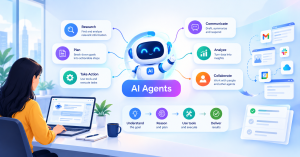
AI is reaching the same inflection point. While AI models and agents are powerful, connecting them with automation layers—like deployment tools, monitoring systems, or security platforms—often requires ad hoc integrations. MCP solves this by defining a consistent protocol for AI to communicate with infrastructure workflows.
In practical terms, it acts as a universal adapter, helping AI systems interact seamlessly with DevOps pipelines and operational tools.
Where AI Meets GitOps: The Argo CD Example
Argo CD is one of the most relied-upon GitOps engines, used to ensure Kubernetes environments stay synchronized and efficient. Traditionally, adding AI to GitOps meant maintaining complex custom code. With the new MCP server for Argo CD, AI agents can directly query deployment states, synchronize workloads, and access logs dynamically.
This reduces manual overhead and enhances reliability. Operators can now use intelligent automation to check cluster health, predict deployment drift, and execute sync actions safely through AI interfaces following open standards.
A Community-Led Future: Donating Argo CD MCP Server
Open source thrives through shared ownership, and the Argo CD MCP Server is a prime example. Originally built at Akuity, the tool was donated to the Argo Project community and is now maintained in the open under argoproj-labs/mcp-for-argocd.
The response has been enthusiastic. Developers are already testing, submitting patches, and proposing new features. This transition ensures the project evolves according to the community’s collective needs rather than a single vendor’s roadmap.
By making its development transparent and collaborative, the community is setting the blueprint for how AI and cloud native can advance together through open standards.
Expanding the Horizon: Beyond GitOps
The role of MCP extends far beyond Argo CD. Its framework enables AI agents to:
- Query metrics and traces from observability platforms
- Manage policies in service meshes
- Conduct compliance and security checks across infrastructure
In each case, MCP standardizes how AI can interact with mission-critical systems, eliminating repetitive integration efforts. For enterprises, this standardization accelerates adoption and enhances trust in AI-driven operations. For the broader community, it prevents fragmentation—helping innovation scale more cohesively across the ecosystem.
Why Open Source Remains the Backbone
The open source model continues to power cloud innovation. Shared code, transparent contributions, and standards-based collaboration allow communities to solve complex challenges faster than any single entity could.
Transitioning the MCP server to a community-owned repository embodies this principle. It ensures that technical direction is guided by shared benefit—focusing on interoperability, not lock-in. In cloud native development, openness is not simply a licensing choice; it is the mechanism through which sustainable progress occurs.
Looking Ahead: The Standardization Path for AI
The journey of MCP mirrors earlier chapters in cloud native innovation. Containers entered mainstream use through OCI. GitOps gained maturity through collaborative projects like Argo CD and Flux. Service meshes flourished once interoperability standards emerged.
AI’s integration into infrastructure appears poised to follow this trajectory. Open standards will define how AI communicates with infrastructure layers—making these integrations secure, repeatable, and scalable.
A Call to the Open Source Community
Community participation will determine MCP’s success. Contributors, operators, and AI practitioners alike can influence how these standards evolve by experimenting, sharing feedback, and co-developing open implementations.
The donation of the Argo CD MCP Server serves as an invitation to collaborate. Open source contributions like this bridge the gap between innovative prototypes and production-ready systems. As AI reshapes infrastructure management, collective stewardship—not proprietary isolation—will lead the way forward.
Shared standards changed how we build software. Through initiatives like MCP, they will now transform how we operate and automate it in the AI era. The future of cloud native isn’t just open—it’s intelligent, connected, and community-driven.
Read more such articles from our Newsletter here.