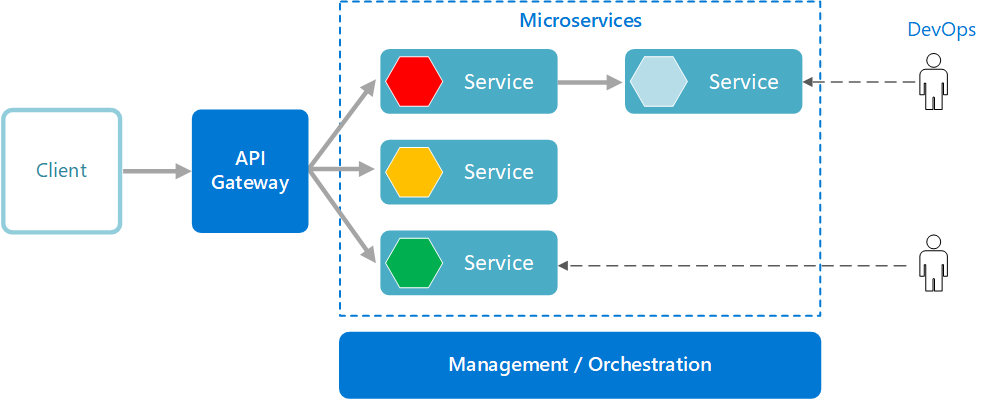
Microservices architecture represents a modern approach to software development that divides a complex application into small, independent services. Unlike traditional monolithic structures, microservices are loosely coupled, making it more straightforward to build, test, and scale applications.
This architectural style allows independent operation of each service, or “microservice,” and enables communication with other services through APIs. Given the demand for agile development and scalable solutions, microservices have become integral to applications in sectors like e-commerce, finance, and social media.
In this guide, we’ll explore the principles, components, advantages, and challenges of microservices, compare them with monolithic structures, discuss best practices, and examine examples of real-world microservices.
Key Principles of Microservices
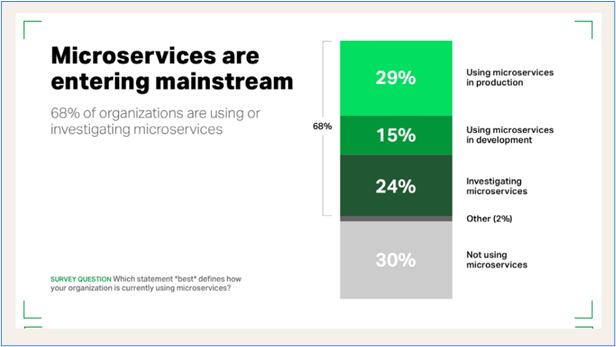
Service Independence
Each microservice functions independently, with its own codebase and data, minimizing dependency on other services. This autonomy allows for frequent updates and modifications without disrupting other parts of the application.
Decentralized Data Management
Microservices architecture emphasizes decentralization, where each service has its database, unlike a monolithic architecture, where data is centralized. This allows each microservice to choose a database that best suits its requirements, supporting scalability and rapid data retrieval.
Scalability and Flexibility
Since microservice applications are modular, individual services can scale independently based on demand. This flexibility optimizes resources and reduces costs, as you don’t need to scale the entire application to support a high-demand function.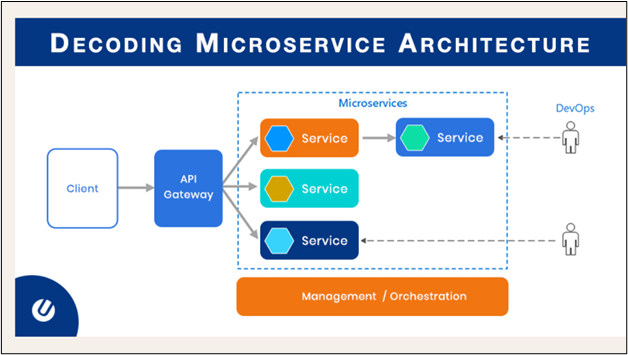
Components of Microservices Architecture
Service Discovery
Service discovery manages how services locate each other within a network. With automated service registration and discovery, it becomes easier to locate and communicate with required services even as they scale.
API Gateway
The API Gateway functions as a single entry point for all client interactions, routing client requests to appropriate microservices. It handles authentication, request routing, and load balancing, making the system more secure and manageable.
Load Balancer
A load balancer distributes client requests across multiple instances of microservices, enhancing performance and availability.
Service Registry
This database keeps track of all available microservices, maintaining updated information on their network locations, which is crucial for service discovery and smooth inter-service communication.
Circuit Breaker
To prevent failures from affecting the full system, a circuit breaker monitors services and isolates failures when necessary. This component improves resilience by stopping requests from going to a failing service, ensuring the application’s stability.
Advantages of Microservices Based Architecture
Improved Scalability
Microservices based architecture enables individual scaling of components, allowing applications to handle large volumes of users without affecting overall performance.
Enhanced Fault Isolation
Microservices’ modular structure limits the impact of failures, so when one service fails, others remain functional, enhancing system resilience.
Technology Diversity
Each microservice can be drafted in a different programming language or framework, allowing teams to choose the best tools for each specific task.
Faster Time-to-Market
With service independence, teams can develop, test, and deploy microservice application faster than in a monolithic setup. This speed facilitates a quicker response to market demands and customer feedback.
Challenges in Implementing Microservices
Increased Complexity
Implementing microservices requires managing multiple services, which can become complex. It demands careful orchestration, communication, and data consistency across all services.
Data Consistency
Due to decentralized data, ensuring data consistency across services can be challenging, especially during complex transactions that involve multiple services.
Network Latency
The increased number of service calls in a microservices architecture can lead to network latency, which could impact performance if not optimized properly.
Security Concerns
With many APIs exposed for inter-service communication, microservices architecture can be vulnerable to security breaches, making it essential to implement stringent security protocols.
Microservices vs. Monolithic Architecture
Structural Differences
A monolithic architecture has all components in one codebase, whereas microservices are split into independent services. In microservices, services can be developed and deployed individually.
Development and Deployment
Microservices allow for independent development and deployment cycles, enabling quicker updates and fixes. Conversely, monolithic architectures require the entire application to be redeployed for each change.
Scalability Comparison
Microservices support horizontal scalability, enabling individual scaling of high-demand services. In a monolithic system, scaling means scaling the entire application, which is resource-intensive.
Best Practices for Microservices Implementation
Design for Failure
Design microservices to anticipate potential failures and implement measures like retries, timeouts, and circuit breakers to ensure resilience.
Implement Proper Monitoring
Use monitoring tools to track service performance, detect issues early, and gather real-time insights. Monitoring is crucial to understand how each service operates and interacts within the architecture.
Use Containerization
Containerization tools like Docker help in deploying, scaling, and managing microservices efficiently by packaging each service and its dependencies independently.
Adopt DevOps Practices
DevOps practices are essential for continuous integration and deployment (CI/CD), improving collaboration and speed while ensuring quality and consistency in microservices-based applications.
Real-World Microservices Architecture Examples
Netflix
Netflix migrated to a microservices architecture to handle large traffic and manage frequent updates. Their system is known for its scalability, allowing them to serve millions of users across the globe with personalized content recommendations.
Amazon
Amazon’s e-commerce platform transitioned to microservices to manage massive user demands and improve its catalog management. With each service handling different functionalities, Amazon offers a seamless shopping experience even during peak times.
Uber
Uber’s microservices architecture manages critical services like user location, ride requests, and payment processing independently, providing high reliability and availability.
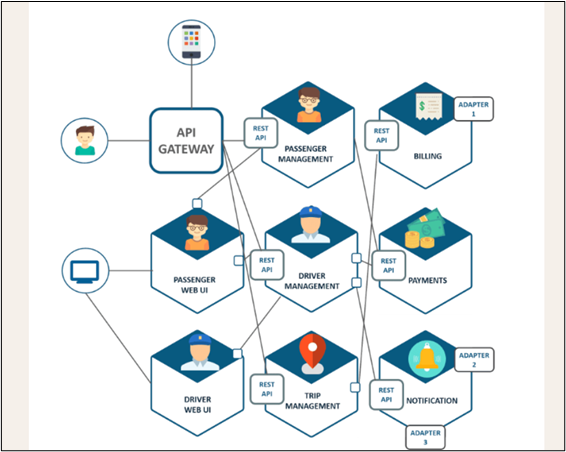
Future of Microservices Architecture
Serverless Computing
Serverless computing is likely to complement microservices, offering even more flexibility and cost-efficiency by running services only when needed. This can reduce infrastructure costs and optimize resource utilization.
AI and Machine Learning Integration
Microservices architecture is expected to incorporate AI and machine learning for enhanced data interpretation, customized interfaces and decision-making processes at all levels which will boost user experience as well as business performance.
Conclusion
Microservices architecture has changed the way modern apps are developed and deployed. They provide scalability, resilience, and agility to applications as well. Although there are challenges brought about by increased complexity and security concerns, the benefits tend to outweigh them. For organizations seeking growth and innovation at a fast pace, the approach seems relevant. With the future advancement of technologies such as serverless computing and AI, microservices seem to be the way to go for organizations whose aim is to innovate in a digital world.
Despite the potential challenges in moving towards microservice architecture, organizations taking those challenges are willing to trade them off for transformational rewards. From better scalability to quicker development cycles to better fault tolerance, today’s interconnected world has opened up new possibilities and new standards for cloud-native applications through microservices.