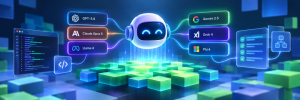
AI-driven coding assistants have rapidly embedded themselves in development workflows, promising a revolution in productivity. With more than 75% of developers now using AI coding tools for tasks like code generation and review, the software industry is moving at an unprecedented pace. However, according to Google’s 2024 DORA report and related industry research, this progress comes with a notable downside: decreased delivery stability and throughput.
The Mixed Impacts of AI Coding Tools
Software teams that have adopted AI tools report an average 3.4% improvement in code quality and a 3.1% increase in code review speed. These modest productivity gains suggest that as the technology matures, further improvements may be realized. Yet, the same teams experience a 7.2% decline in delivery stability and face a 1.5% reduction in overall delivery throughput. These changes mean faster coding and reviews, but also a higher likelihood of unstable or delayed releases.
Why Are Stability and Throughput Falling?
AI-generated code works well within the explicit context provided, but often lacks awareness of full-system interactions and business logic. Since AI models learn predominantly from historical data, they can cement outdated patterns or introduce common misconceptions into modern codebases. Another challenge is that teams might limit AI tool usage to coding tasks, neglecting critical areas like automated testing, infrastructure, or security integration.
Security: The Silent Risk of Accelerated AI Coding
Security ranks among the top risks of AI-assisted software development. AI-generated code can accidentally contain vulnerabilities such as hardcoded secrets or insecure patterns. Studies have shown developers relying on AI assistants are up to 40% more likely to submit insecure code. For instance, an experiment with 900 real prompts revealed that Copilot often supplied hardcoded secrets, a direct threat to secure operations.
The Growing Technical Debt and Risk
Rushing code into production without robust checks can result in a surge of technical debt. AI can generate functional code quickly, but may bypass project standards, lack optimum architectural fit, or escape standard documentation. Over time, this leads to higher maintenance costs and increased risk of undetected flaws, especially as AI-generated code volume grows.
Closing the Stability Gap: Guardrail Strategies
To maximize the benefits of AI coding tools while mitigating risks, organizations need to implement modern platform engineering practices and guardrails:
- Secure infrastructure modules: Use infrastructure as code (IaC) and policy as code to enforce repeatable, secure deployments in any environment.
- Centralized secrets management: Prevent hardcoded credentials by applying enterprise secrets management and mandating all AI-generated code flows through these controls.
- Centralized visibility and control: Aggregate tracking and compliance reporting across all cloud environments, making it easier to audit AI-generated code.
- Golden images and workflows: Define pre-built, approved machine images and modules for developers, ensuring consistency and feeding reliable examples back into AI engines.
- Unified platform approach: Manage all infrastructure, security, and operational elements from a single integrated platform, simplifying governance and making operational context available for both developers and AI tools.
Adapting to the AI-Driven Future
While AI is now an inseparable force in software engineering, its adoption introduces both new momentum and new forms of risk. Developers are embracing these tools, but unless teams modernize their platforms and implement guardrails, the trade-off between speed and stability will only widen. The path forward is proactive: strengthening processes that ensure delivery remains reliable, secure, and maintainable—even at AI’s new pace.
Read more such articles from our Newsletter here.