Key Summary
When comparing PostgreSQL vs MySQL, it is important to understand that both are mature, open-source relational database management systems with strong SQL support, large user communities, and extensive production use. The choice between them depends on factors such as application requirements, data complexity, transaction behavior, scalability needs, indexing requirements, cloud environment, and the development team’s familiarity with each database.
MySQL is widely used for web applications and transactional workloads, while PostgreSQL is known for its extensive SQL capabilities, advanced data types, extensibility, and support for complex analytical and transactional workloads.
The PostgreSQL vs MySQL performance question does not have a universal answer. Performance depends heavily on the workload, schema design, indexes, queries, hardware, configuration, and concurrency patterns. For professionals learning database technologies, understanding both systems is useful because many organizations use either PostgreSQL or MySQL as part of their application and data infrastructure.
General Overview of PostgreSQL and MySQL
What is MySQL?
MySQL is an open-source relational database management system originally developed by MySQL AB. It is now developed and distributed by Oracle.
MySQL stores structured information in tables and uses SQL for creating, retrieving, updating, and managing data.
A basic MySQL query might look like:
SELECT
customer_id,
customer_name,
email
FROM customers
WHERE status = ‘active’;
MySQL is commonly used for web applications, transactional systems, content management systems, e-commerce platforms, and other applications that require a relational database.
MySQL’s default storage engine, InnoDB, supports transactions, foreign keys, and ACID properties.
History of MySQL
MySQL originated in Sweden in the 1990s and became widely adopted because of its open-source model, relatively simple administration, and strong performance for many web-oriented workloads.
The MySQL project was acquired by Sun Microsystems in 2008, and Oracle acquired Sun Microsystems in 2010.
MySQL continues to be actively developed. Its current release model includes Long-Term Support and Innovation release tracks. MySQL 8.4 is the LTS series, while newer Innovation releases provide access to newer capabilities on a faster release cycle.
What is PostgreSQL?
PostgreSQL is an open-source object-relational database management system with a strong emphasis on standards compliance, extensibility, reliability, and advanced database functionality.
A PostgreSQL query can look similar to MySQL:
SELECT
customer_id,
customer_name,
email
FROM customers
WHERE status = ‘active’;
However, PostgreSQL offers a broad set of additional capabilities, including advanced indexing, sophisticated data types, JSON support, window functions, common table expressions, extensions, and procedural programming.
PostgreSQL is frequently used for applications that require complex queries, sophisticated data models, strong transactional consistency, or specialized database functionality.
History of PostgreSQL
PostgreSQL originated from the POSTGRES project at the University of California, Berkeley. The project evolved from the earlier INGRES database research and eventually became PostgreSQL.
The PostgreSQL Global Development Group has continued its development as an open-source community project.
PostgreSQL follows a yearly major-release cycle. PostgreSQL 17 was released in September 2024, followed by PostgreSQL 18 in September 2025. PostgreSQL 18 is therefore the current major release in 2026.
What Operating Systems Do PostgreSQL and MySQL Work With?
Both PostgreSQL and MySQL support major operating system environments, although exact support varies by version, architecture, and distribution.
PostgreSQL officially supports current versions of operating systems including Linux, Windows, macOS, FreeBSD, OpenBSD, NetBSD, Solaris, and illumos, among others.
MySQL also supports major operating environments, including Linux, Windows, and macOS, with platform support varying by release. MySQL documentation recommends checking the current supported-platform information when selecting a version.
For developers, this means neither database is restricted to a single operating system.
Both can also be deployed in virtualized and containerized environments, although production support and certification can vary according to the platform and distribution.
What Do MySQL and PostgreSQL Have in Common?
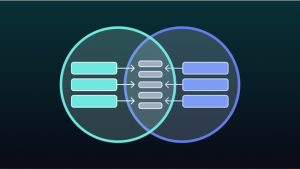
MySQL and PostgreSQL have many fundamental similarities.
Both:
- Are relational database management systems.
- Use SQL as their primary query language.
- Support transactions.
- Support indexes.
- Support primary and foreign keys.
- Support views.
- Support stored procedures and functions.
- Can be used for web applications and enterprise systems.
- Support replication and high-availability architectures.
- Can run on cloud platforms.
- Have large developer and user communities.
A basic query can look almost identical in both:
SELECT
product_name,
price
FROM products
WHERE price > 1000
ORDER BY price DESC;
However, similarities at the SQL level do not mean that the databases behave identically.
Surface Similarities That Mask Real Differences
The differences become more noticeable when you work with:
- Advanced indexing
- JSON data
- Full-text search
- Complex queries
- Extensions
- Transaction isolation
- Replication
- Stored procedures
- Data types
- Query optimization
- Database-specific functions
This is why developers should not assume that SQL written for one database will always work unchanged in another.
When to Use MySQL Over PostgreSQL (and Vice Versa)
There is no universal answer to the question PostgreSQL vs MySQL which is better.
The appropriate choice depends on the workload.
When to Use MySQL
MySQL can be a suitable choice when:
- You are building a conventional web application.
- Your application primarily performs transactional CRUD operations.
- Your development team already has strong MySQL experience.
- You need broad hosting and platform support.
- Your workload fits well with MySQL’s ecosystem.
- You prefer the MySQL release and tooling ecosystem.
For example, a straightforward e-commerce application might use MySQL for customers, products, orders, payments, and inventory.
When to Use PostgreSQL
PostgreSQL can be a strong option when:
- Your application requires complex SQL.
- You need advanced data types.
- You need extensive indexing options.
- Your workloads involve complex relationships.
- You require PostgreSQL extensions.
- You need sophisticated transactional behavior.
- Your application uses significant JSON or semi-structured data.
- You need advanced analytical queries alongside transactional workloads.
For example, an application managing geospatial information, complex financial data, or sophisticated reporting may benefit from PostgreSQL’s broader feature set.
PostgreSQL vs MySQL Performance: 2026 Benchmarks
The phrase PostgreSQL vs MySQL performance can be misleading if it is treated as a single benchmark question.
There is no database that is universally faster for every workload.
Performance depends on:
- Query design
- Indexing
- Dataset size
- Hardware
- Memory allocation
- Storage performance
- Connection count
- Transaction patterns
- Concurrency
- Database configuration
- Execution plans
A simple point lookup may behave very differently from a complex aggregation involving several joins.
For example:
SELECT
customer_id,
SUM(order_amount) AS total_revenue
FROM orders
GROUP BY customer_id;
The performance of this query depends on the dataset, database configuration, hardware, and execution strategy.
PostgreSQL 17 introduced several performance improvements, including changes to vacuum memory management, sequential-read behavior, high-concurrency write performance, and index-related query execution. PostgreSQL 18 subsequently introduced an asynchronous I/O subsystem designed to improve several workloads, including sequential scans and vacuum operations.
MySQL 8.4 also continues to receive optimizer, InnoDB, and performance-related improvements through its LTS release cycle. The 8.4 series has continued receiving updates throughout 2026.
Connection Pooling at Scale
Connection management can become important when an application handles a large number of simultaneous users.
Opening a new database connection for every request can create unnecessary overhead.
Connection pooling allows applications to reuse established database connections.
For example, an application may maintain a pool of connections and assign an available connection to each request rather than repeatedly creating new connections.
The appropriate pool size depends on application concurrency, database capacity, query duration, and infrastructure configuration.
Therefore, when evaluating performance, connection management should be considered alongside raw query execution.
PostgreSQL User Support vs. MySQL User Support
Both databases have extensive documentation, community resources, commercial support options, and third-party tools.
1.) MySQL User Support
MySQL provides official documentation, release notes, forums, developer resources, and commercial support through Oracle.
The MySQL documentation also covers installation, configuration, optimization, replication, security, and application development.
2.) PostgreSQL User Support
PostgreSQL has extensive official documentation and a large open-source community.
Because PostgreSQL is community-developed, users can access documentation, mailing lists, community discussions, extensions, and a wide ecosystem of third-party tools.
Its official project also provides documentation for supported platforms and different major releases.
Which Programming Languages Do PostgreSQL and MySQL Support?
Both PostgreSQL and MySQL can be accessed from many programming languages through database drivers, connectors, ORMs, and frameworks.
Common languages include:
- Python
- Java
- JavaScript
- TypeScript
- PHP
- C
- C++
- C#
- Go
- Ruby
- Rust
For example, Python applications can connect to PostgreSQL using drivers such as psycopg, while MySQL applications can use connectors such as MySQL Connector/Python.
The database choice therefore does not generally limit developers to one programming language.
Instead, developers should select a supported and well-maintained driver or framework appropriate for their application.
PostgreSQL Indexes vs. MySQL Indexes
Indexes allow databases to locate records more efficiently without scanning every row in a table.
Both PostgreSQL and MySQL support several types of indexes, but their implementation and available options differ.
MySQL Index Types
MySQL commonly uses B-tree indexes through InnoDB and also supports other index types and specialized capabilities depending on the storage engine and version.
A basic index can be created using:
CREATE INDEX idx_customer_email
ON customers(email);
This can improve queries that frequently search by email, although indexes also consume storage and can increase the cost of data modifications.
PostgreSQL Index Types
PostgreSQL supports multiple index methods, including:
- B-tree
- Hash
- GiST
- SP-GiST
- GIN
- BRIN
For example:
CREATE INDEX idx_customer_email
ON customers(email);
PostgreSQL also supports specialized indexes for particular data structures and query patterns.
Choosing the correct index requires understanding the query workload rather than simply creating indexes on every column.
How Is Coding Different in PostgreSQL vs. MySQL?
Although both use SQL, developers will encounter syntax and behavioral differences.
1. Case Sensitivity
PostgreSQL and MySQL can handle identifiers differently depending on how they are written and configured.
PostgreSQL folds unquoted identifiers to lowercase, while quoted identifiers preserve their exact case.
For example:
CREATE TABLE customers (
customer_id INT,
customer_name TEXT
);
Using consistent lowercase naming can reduce confusion when moving between database systems.
2. Default Character Sets and Strings
MySQL supports configurable character sets and collations and commonly uses utf8mb4 for modern Unicode data.
PostgreSQL uses database and cluster encoding settings and supports Unicode through UTF-8.
String type definitions also differ.
For example, PostgreSQL commonly uses:
name TEXT
while MySQL commonly uses:
name VARCHAR(255)
The appropriate choice depends on application requirements and database behavior.
3. IF and IFNULL vs. CASE Statements
MySQL provides functions such as IF() and IFNULL():
SELECT
IFNULL(phone_number, ‘Not Available’) AS phone
FROM customers;
PostgreSQL commonly uses COALESCE():
SELECT
COALESCE(phone_number, ‘Not Available’) AS phone
FROM customers;
Both systems also support CASE expressions:
SELECT
customer_name,
CASE
WHEN total_spend >= 10000 THEN ‘High Value’
WHEN total_spend >= 5000 THEN ‘Medium Value’
ELSE ‘Standard’
END AS customer_segment
FROM customers;
This is one reason developers should learn database-specific SQL behavior rather than assuming every SQL feature works identically across platforms.
PostgreSQL vs MySQL in the Cloud
Both databases are available through major cloud platforms, either as managed database services, self-managed deployments, marketplace offerings, or database-compatible services.
1. AWS
AWS provides managed database options for both PostgreSQL and MySQL through Amazon RDS. PostgreSQL-compatible and MySQL-compatible technologies are also available through other AWS database services.
Managed services can reduce the operational burden associated with:
- Backups
- Patching
- Monitoring
- Scaling
- High availability
2. Google Cloud
Google Cloud provides managed relational database capabilities for PostgreSQL and MySQL through Cloud SQL.
Organizations can use managed services to reduce the infrastructure work required to operate database servers.
3. Microsoft Azure
Azure provides managed PostgreSQL and MySQL services, allowing teams to deploy relational databases without managing every underlying infrastructure component themselves.
The cloud provider should therefore not be the only factor in deciding between PostgreSQL and MySQL. Workload requirements, compatibility, operational experience, cost, and existing architecture should also be considered.
When Should You Migrate from MySQL to PostgreSQL?
Migration from MySQL to PostgreSQL can make sense when an application’s requirements have changed.
Potential reasons include:
- Increasingly complex SQL requirements
- Need for PostgreSQL-specific extensions
- Advanced indexing requirements
- Complex data types
- Existing PostgreSQL expertise within the team
- Application architecture changing toward PostgreSQL-supported features
- Integration requirements with PostgreSQL-based systems
However, migration is not automatically beneficial.
A database migration can involve:
- Schema conversion
- SQL conversion
- Data type mapping
- Application code changes
- Stored procedure conversion
- Index redesign
- Testing
- Performance validation
- Production cutover
Migration Tooling
Migration tools can help move schema and data between systems, but they do not eliminate the need for application-level testing.
A migration process might begin with schema analysis:
SELECT
table_name,
column_name,
data_type
FROM information_schema.columns
WHERE table_schema = ‘public’;
The exact query and metadata structure will differ between MySQL and PostgreSQL.
After migration, queries should be tested against representative datasets to verify both correctness and performance.
Latest PostgreSQL and MySQL Releases (2026)
1. PostgreSQL 17
PostgreSQL 17 was released on September 26, 2024. It introduced improvements to memory management, query performance, high-concurrency workloads, bulk loading, indexes, JSON functionality, and logical replication.
However, PostgreSQL 17 is no longer the latest major release.
2. PostgreSQL 18
PostgreSQL 18 was released on September 25, 2025 and is the current major PostgreSQL release in 2026.
It introduced an asynchronous I/O subsystem, optimizer improvements, skip scans for more multicolumn B-tree use cases, uuidv7(), virtual generated columns, OAuth authentication support, and other SQL and database-management improvements.
PostgreSQL 18 is currently supported through November 2030 under the project’s versioning policy.
3. MySQL 8.4 LTS and MySQL 9.x
MySQL 8.4 is the current LTS series and was released in April 2024.
MySQL also maintains an Innovation release track that introduces newer features more frequently. The MySQL documentation identifies the LTS and Innovation tracks as separate release paths for different operational needs.
As of 2026, the MySQL 8.4 LTS series continues to receive updates, including releases in 2026.
For production systems where long-term stability is a priority, the LTS track is an important consideration.
What are the 8 key differences between MySQL and PostgreSQL?
1. Database architecture
Both systems are relational databases, but their internal architectures and implementation details differ.
PostgreSQL uses a process-based architecture, while MySQL’s server architecture and storage-engine model provide a different approach to handling database operations.
These differences affect areas such as memory usage, concurrency, storage, and administration.
2. Concurrency and transaction handling
Both databases support ACID transactions, but their approaches to concurrency control differ.
PostgreSQL uses Multi-Version Concurrency Control, or MVCC, extensively to allow transactions to work with different versions of rows.
MySQL’s InnoDB storage engine also uses MVCC and provides transactional capabilities.
The practical behavior depends on transaction isolation, query patterns, locking, and workload characteristics.
3. Performance and query optimization
Performance varies according to workload.
MySQL can perform very well for many transactional web workloads, while PostgreSQL provides strong performance for complex queries and sophisticated analytical or transactional operations.
Neither should be declared universally faster without specifying the workload and benchmark methodology.
4. Scalability strategies
Both databases can scale vertically and horizontally using different architectures and tools.
Scaling strategies may include:
- Larger compute resources
- Read replicas
- Partitioning
- Connection pooling
- Caching
- Replication
- Distributed architectures
The appropriate strategy depends on application requirements.
5. Indexing capabilities
Both systems provide B-tree indexes and other indexing mechanisms.
PostgreSQL provides a particularly broad set of index methods, including GiST, SP-GiST, GIN, and BRIN.
MySQL’s indexing capabilities are closely tied to its storage engines, particularly InnoDB.
6. Data types and modeling flexibility
PostgreSQL provides extensive native data types and supports specialized data modeling through features and extensions.
It has strong support for arrays, JSON/JSONB, ranges, UUIDs, and other specialized data structures.
MySQL also provides a broad range of data types, including JSON, spatial types, and temporal types.
7. Extensibility and programmability
PostgreSQL is particularly known for its extensibility.
Users can create extensions, custom data types, functions, operators, and other database objects.
MySQL also provides stored programs, plugins, components, and other extension mechanisms.
8. Features and tooling
Both ecosystems provide extensive tools for development, administration, monitoring, replication, backup, and cloud deployment. The difference is often less about whether a capability exists and more about how it is implemented and how well it fits a particular development environment.
Integrate.io: Data Integration for MySQL and PostgreSQL
Data integration becomes increasingly important when organizations use databases as part of a larger analytics architecture. Tools such as Integrate.io can be used to connect data sources and move information into downstream systems.
The Unified Stack for Modern Data Teams
A modern data stack may include:
- Operational databases
- Data integration platforms
- Data warehouses
- Transformation tools
- Business intelligence platforms
- Machine learning systems
The database is therefore only one part of the overall data architecture.
Subscribe To The Stack Newsletter
Professionals working with data technologies can benefit from following database, data engineering, analytics, and data infrastructure developments. This is particularly important because database features, cloud services, and data architecture practices continue to evolve.
What are the different Platform Capabilities?
A modern data integration platform can support multiple stages of a data workflow.
1. Platform overview
The platform can provide connectors and workflows for moving data between operational systems, databases, warehouses, and analytical platforms.
2. Transformations
Transformation capabilities allow organizations to clean, filter, standardize, and reshape data before it reaches downstream systems.
3. Security
Data integration workflows need appropriate authentication, encryption, access controls, and monitoring to protect sensitive information.
4. Governance
Governance helps organizations establish consistent policies around data access, quality, lineage, and usage.
5. Extensibility
Extensible architectures make it easier to add new data sources and destinations as requirements change.
6. Activations
Data can be moved beyond analytics environments and made available to operational systems or other downstream applications where appropriate.
7. Hybrid Deployment
Organizations with a combination of cloud and on-premises infrastructure may require integration architectures that support hybrid environments.
What are the operational use cases?
Databases such as PostgreSQL and MySQL frequently sit at the center of operational applications.
1. Open Data Infrastructure
Modern organizations increasingly connect operational databases with analytical systems rather than keeping operational and analytical data completely isolated.
2. Data democratization
Well-structured data pipelines allow more teams to access reliable information for reporting and decision-making.
3. Infrastructure modernization
Organizations may modernize legacy database infrastructure by adopting managed cloud services, automated pipelines, and modern data platforms.
4. Embedded
Database and data capabilities can also be embedded into applications and customer-facing products.
5. Data foundation for AI
Reliable operational and analytical data provides an important foundation for AI and machine learning applications.
6. Analytics
Data extracted from PostgreSQL and MySQL systems can be transformed and loaded into analytical platforms for dashboards, reporting, forecasting, and advanced analysis.
How to choose between PostgreSQL and MySQL
The choice should begin with the application’s actual requirements rather than the popularity of either database.
Consider:
- What type of workload will the database handle?
- How complex are the queries?
- How much concurrency is expected?
- Which data types are required?
- Are specialized indexes needed?
- Does the application depend on database-specific features?
- Which database does the development team already know?
- What cloud platform will host the database?
- What are the backup and recovery requirements?
- How important are extensions and custom functionality?
- What are the long-term scaling requirements?
For a conventional web application with a straightforward relational model, MySQL may fit naturally. For applications requiring complex SQL, advanced data types, extensive indexing options, or PostgreSQL-specific capabilities, PostgreSQL may be more appropriate. The important point is that PostgreSQL vs MySQL which is better is not a question with one answer for every project. The better choice depends on the requirements of the specific workload.
Preparing your data for analytics after choosing a database
Choosing a database is only one part of building a reliable data architecture. Once PostgreSQL or MySQL is selected, organizations may need to move operational data into a warehouse or analytics platform. A typical workflow could look like:
Operational Database → Data Integration → Data Warehouse → Transformation → BI / Analytics
For example, customer transactions stored in MySQL could be extracted into a warehouse and transformed into analytical models. Similarly, a PostgreSQL application database could feed customer, product, transaction, and usage information into an analytical environment. The quality of the resulting analytics depends on data modeling, transformation, validation, and governance as much as on the database itself.
Is Postgres faster than MySQL and which one is better in benchmarks?
Neither PostgreSQL nor MySQL can be considered universally faster. Benchmark results depend on the workload, hardware, database version, configuration, indexing, concurrency, query patterns, and dataset size. For example, a benchmark focused on simple transactional queries may produce different results from one focused on complex joins, aggregations, JSON processing, or high-concurrency workloads. A meaningful benchmark should therefore reproduce the workload that the actual application expects to run.
What are the differences between PostgreSQL and MySQL syntax?
Both databases use SQL, so many basic queries are similar.
For example:
SELECT *
FROM customers
WHERE status = ‘active’;
However, differences appear in functions, data types, date handling, identifier behavior, procedural SQL, auto-increment mechanisms, JSON operations, and database-specific features. MySQL commonly uses AUTO_INCREMENT, while PostgreSQL applications frequently use identity columns or sequences. MySQL also provides functions such as IFNULL(), while PostgreSQL commonly uses COALESCE(). Therefore, SQL knowledge transfers well between the two databases, but developers still need to understand each database’s specific syntax and behavior.
Conclusion
The PostgreSQL vs MySQL comparison is not simply about determining which database is better. Both are mature relational database systems capable of supporting production applications at significant scale. MySQL has a long history in web applications and transactional systems, while PostgreSQL provides a broad feature set for complex data models, advanced SQL, extensibility, and sophisticated workloads.
The PostgreSQL vs MySQL performance question also requires context. A database that performs well for one workload may not produce the same results for another. Query design, indexes, hardware, concurrency, configuration, and data volume all influence performance. For professionals learning data analytics or database development, understanding both platforms is valuable.
Learning their common SQL foundations first and then studying their differences in indexing, transactions, data types, functions, optimization, and administration provides a stronger foundation for working with relational databases.
As of 2026, PostgreSQL 18 is the current major PostgreSQL release, while MySQL 8.4 remains the established LTS series alongside MySQL’s newer Innovation releases.The right database ultimately depends on the application’s technical requirements, existing infrastructure, development expertise, and long-term data strategy.
Frequently Asked Questions (FAQs)
What is the difference between PostgreSQL and MySQL?
PostgreSQL and MySQL are both open-source relational database management systems, but they differ in architecture, indexing, data types, SQL functionality, extensibility, transaction behavior, and ecosystem. PostgreSQL generally offers a broader set of advanced database features, while MySQL is widely used for web applications and transactional workloads.
Which is better, PostgreSQL or MySQL?
Neither database is universally better. The appropriate choice depends on the application’s requirements. MySQL may fit well for many conventional web and transactional applications, while PostgreSQL may be appropriate when advanced SQL, specialized data types, complex queries, extensibility, or sophisticated indexing are important requirements.
What are the key differences between PostgreSQL and MySQL?
Key differences include their database architectures, concurrency mechanisms, indexing options, data types, extensibility, SQL syntax, tooling, and performance characteristics. PostgreSQL offers several specialized index types and extensive extensibility, while MySQL provides a mature storage-engine ecosystem and strong adoption across web and transactional applications.
When should you use PostgreSQL instead of MySQL?
PostgreSQL can be considered when an application requires complex SQL queries, advanced data types, specialized indexing, extensive extensibility, sophisticated transaction behavior, or PostgreSQL-specific features. The decision should be based on actual application requirements rather than assuming that one database is better in every situation.
Is Postgres faster than MySQL and which one is better in benchmarks?
There is no universal performance winner. PostgreSQL and MySQL can perform differently depending on the workload, schema, indexes, queries, hardware, configuration, concurrency, and database version. A meaningful benchmark should reproduce the workload the production application is expected to handle rather than relying on a single generic benchmark.
What are the differences between PostgreSQL and MySQL syntax?
Both databases use SQL and share many common statements, but their syntax differs for certain functions, data types, identity or auto-increment mechanisms, JSON operations, date functions, procedural code, and other database-specific features. Developers moving between them should therefore understand both standard SQL and the specific dialect used by each database.